Football stadium coffee cup collection supports recycling initiative
Sustainability
British master papermaker James Cropper is supporting a collaborative initiative with Little Coffee Cup and Carlisle United Football Club that demonstrates how used coffee cups can be collected, recycled, and reintroduced into the paper supply chain through coordinated, real-world systems.
The project builds on the launch of Little Coffee Cup’s Big Surprise, a children’s book produced using paper made from recycled coffee cups via James Cropper’s CupCycling™ process. Extending beyond the book itself, the initiative now incorporates live cup collection and recycling activity at Carlisle United’s Brunton Park stadium, creating a practical link between storytelling, consumer engagement, and circular infrastructure.
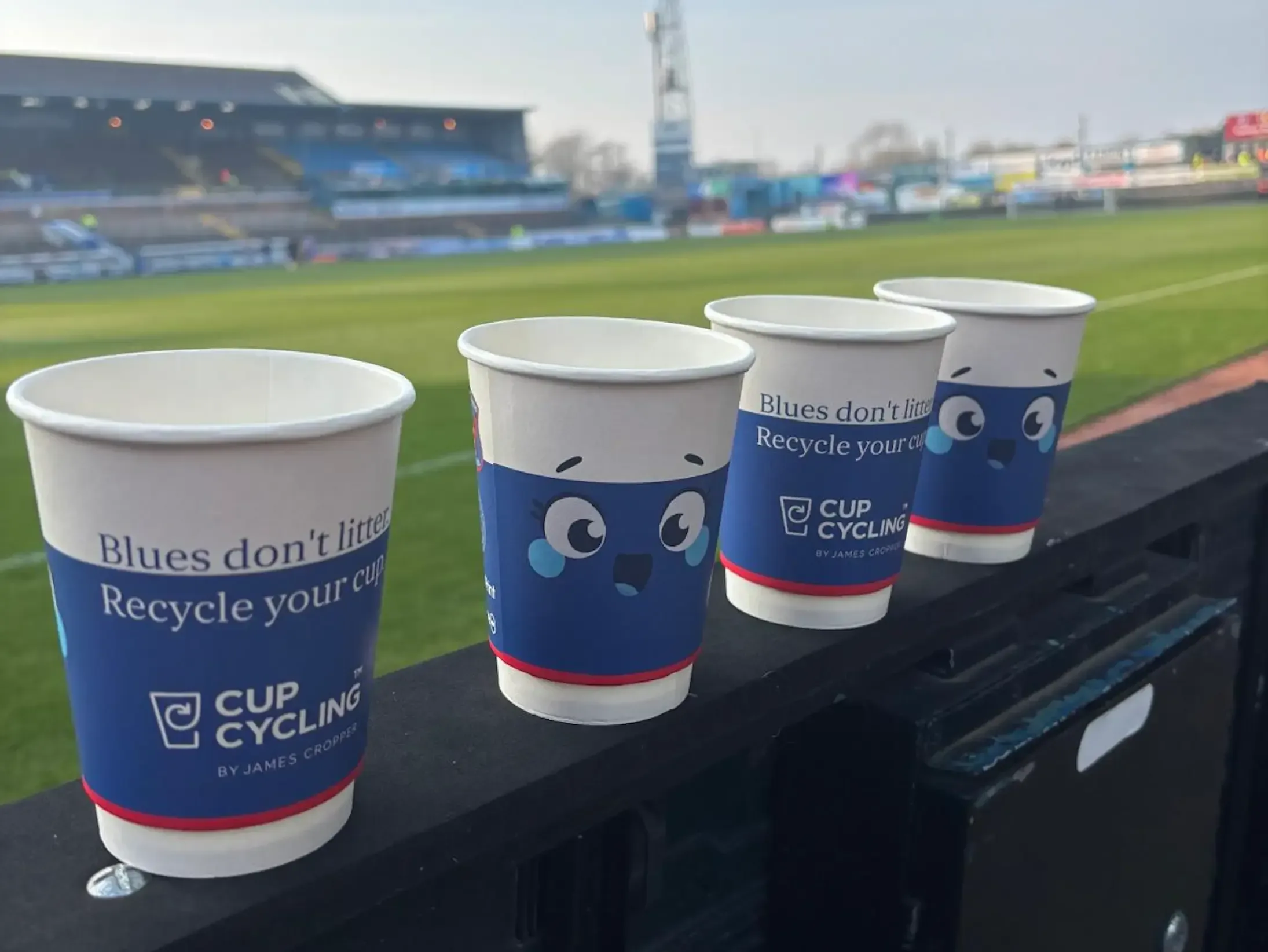
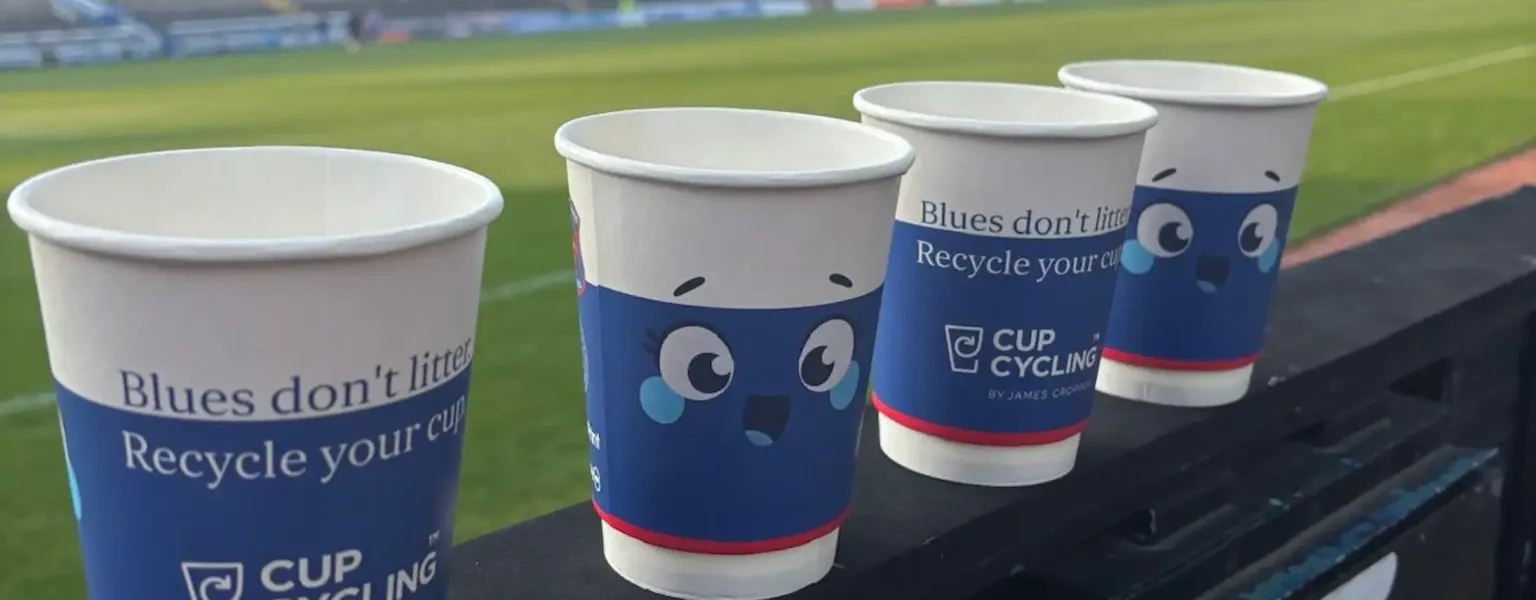
Over the next four Carlisle United home games, cup collection and storage activity will take place within the stadium environment, supported by North West Recycling (NWR) working alongside Hayley Slack. The collaboration reflects a natural alignment between local waste management expertise, club partnerships, and a shared ambition to increase awareness and participation in recycling programmes.
The wider initiative brings together a network of partners working in coordination to enable closed-loop outcomes. co-cr8 is supplying branded collection bins to support in-stadium engagement, while CupPrint has produced a bespoke partnership edition of the PE-lined paper cups used at matches, supplied and served within the stadium by John Watt and Son as Carlisle United’s catering and beverage partner. NW Recycling is responsible for collecting and baling used cups and monitoring returned volumes over the course of the season to better understand recovery rates and participation levels.
Following collection, co-cr8 will transport the recovered cups back into the recycling stream, where James Cropper will process the fibre using its proprietary CupCycling™ technology. The recovered material will then be used to create paper for future Little Coffee Cup products, reinforcing a continuous loop in which materials are kept in use rather than discarded.
CupCycling™ sits at the centre of James Cropper’s circular approach to fibre recovery, transforming PE-lined paper cups—traditionally considered difficult to recycle—into high-quality fibre for premium paper applications. While the facility has the capacity to upcycle up to 700 million cups each year, current volumes remain significantly lower, with around 58 million cups recycled annually. This gap highlights a critical challenge: infrastructure exists, but participation, buying, using, and correctly returning cups remains the limiting factor.
With millions of disposable cups used annually in the UK, initiatives such as this demonstrate how coordinated action across supply chains, supported by community engagement, can contribute to more effective material recovery. By linking storytelling with infrastructure and local partnerships, the project illustrates how circularity can be embedded not only in products, but in the systems that support them.
Little Coffee Cup author, Hayley Slack.
The initiative highlights how regional partnerships can play a critical role in advancing circular economy principles. By combining local expertise, venue-based collection, and specialist recycling capability, the project provides a tangible example of how materials can be captured, processed, and reintroduced into manufacturing cycles within a defined geographic ecosystem.
Stephanie Walker, Head of Technical at James Cropper.
As pressure grows to address the environmental impact of single-use materials, initiatives like this point to a more connected future, one where infrastructure, industry, and community align. By bringing circularity into a live, public setting, the project not only demonstrates what’s possible, but shows how it can be embedded in everyday environments. It is not simply a concept in theory, but a system in motion, proving that circularity can be built, tested, and scaled where people already gather.
Related News
-
Sustainability
Debut children's book made from recycled coffee cups brings sustainability to storytime
-
Sustainability
Kansas City Chiefs launch stadium-wide reusable cup system
-
Sustainability
San Francisco 49ers launch reusable cup scheme at Levi’s Stadium
-
Sustainability
Compostable and recyclable: Starbucks redesigns its iconic white takeaway cup
-
Business
New partnership boosts packaging access for South Australian football clubs
Latest Packaging News

Alupro publishes independent econometric review of the UK PRN market
Alupro has released an in-depth econometric analysis of the Packaging Recovery Note (PRN) market,...
BERO reintroduces limited-edition Spider-Man beer cans
Non-alcoholic beer brand BERO has announced the return of its limited-edition Spider-Man-themed...
Conference programme to tackle sustainability, regulation and innovation at UKPackaging Expo
UKPackaging Expo will put insight, regulation and real-world best practice centre stage this...
PCR and PPWR: Be ready for the 2027 gardening season with PEKU Folien!
As one gardening season comes to an end, preparations for the next are already underway. Whether...