The future of pharma manufacturing was discussed in Amsterdam. Here's what matters

Events
The Pharmaceutical Manufacturing and Packaging Congress (PHARMAP) 2026 brought together senior industry leaders on 20-21 April in Amsterdam for two days of focused discussion on the forces reshaping pharmaceutical manufacturing. Held in partnership with Astellas Pharma Europe, GSK, ESTEVE, Laboratoires Théa and Recipharm, the Congress covered global manufacturing strategies, supply chain resilience, packaging innovation and many other topics.
The Executive Opening Panel set a direct tone for the two days ahead. Speakers addressed the structural pressures facing the sector - from geopolitical disruption to the demands of digital transformation - and made clear that adapting to this environment requires more than investment in technology alone. Alexios Tsamouris, VP International Business Development at PHARMAZAC SA, put it plainly: "The move to PHARMA 4.0 requires more investment in people, processes and adaptive decision-making as well as persistent focus on crisis scenarios and adaptability. Moreover, it requires quick strategic thinking and often agile investment attitudes."
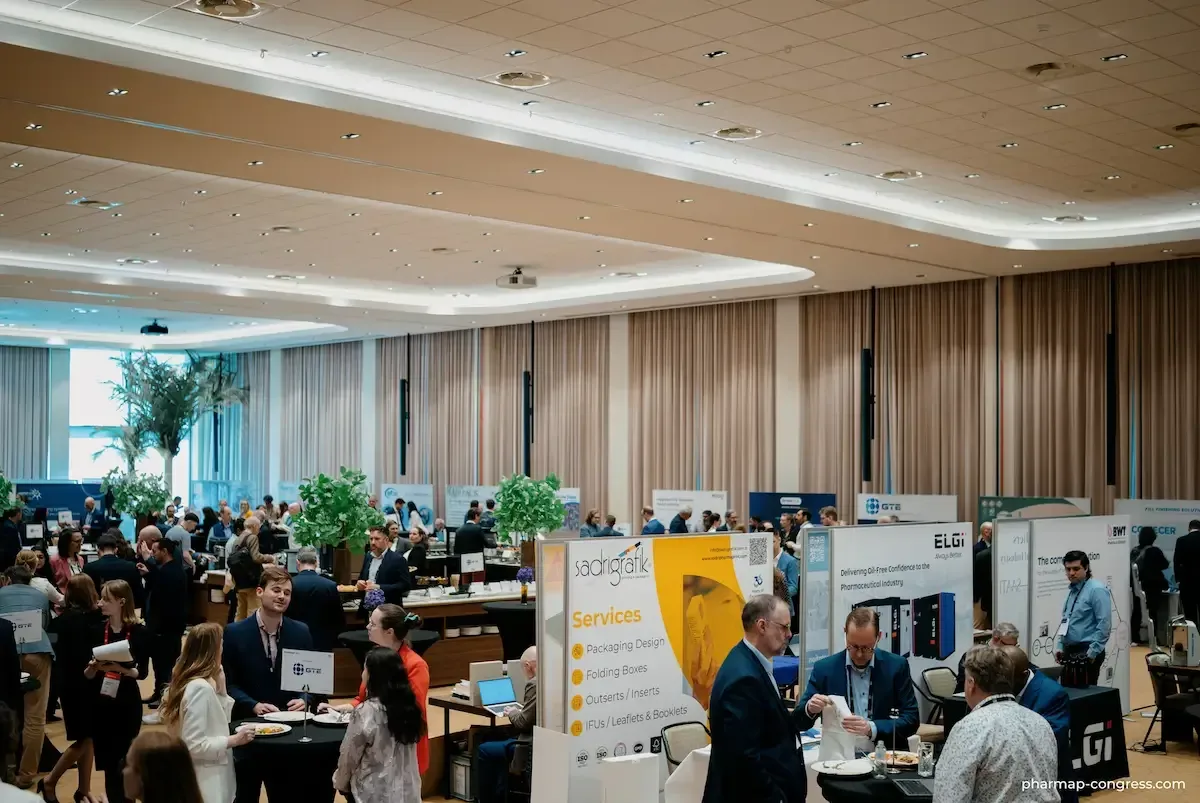
The transformation of pharmaceutical manufacturing emerged as a key theme throughout PHARMAP 2026. Participants discussed the increasing role of outsourcing and contract manufacturing, emphasising the need for strong and balanced partnerships, and the importance of building efficient production models that respond to changing market demands while maintaining quality and reliability.
The session on smart and agile pharmaceutical manufacturing examined the latest strategies and case studies. Speakers explored how technology can be leveraged to reduce costs and enhance operational efficiency, presenting practical solutions and strategic initiatives for pharmaceutical plants. These included an automated casepacker and a palletising cobot on a tube line, industry-adapted mechanical seals, methods to reduce water-related incidents, and approaches to lower maintenance and energy costs whilst improving plant availability and audit robustness. Yet amid the focus on technological solutions, Florian Zwyssig, Head of Global Operational Excellence at Bavarian Nordic, offered a measured reminder: successful transformation depends "70% on people, 20% on processes, and only 10% on technology."
Supply chain resilience received equally close attention. Delegates learnt how the pressures of recent years have accelerated the shift towards more resilient, transparent and regionally diversified supply networks. Ton Knipscheer, Executive Director at ECPA (European Co-Packers Association), highlighted that co-packing and contract manufacturing are no longer peripheral activities: they have become a critical component of modern supply chain strategy, with strong double-digit growth projected in the coming years.
Packaging remained an important part of the agenda, reflecting its expanding role in the pharmaceutical value chain. Speakers examined patient-centricity, packaging solutions for product protection, brand integrity and patient usability, demonstrating that packaging has become a strategic element connecting manufacturing processes with end users. Joost Groen, Independent Consultant in Patient Empowerment at Sidewise, reinforced this point: patients who understand their medication generally show better therapy adherence, and clinicians feel more confident as a result. Adapting information to suit patient understanding, he argued, is one of the most practical levers available for improving health literacy at scale.
The Closing Panel brought the two days together with a forward-looking discussion on the strategic priorities set to define the sector over the next three to five years. Speakers reflected on the themes that had run throughout the Congress - partnership models, digital transformation, patient-centric design, supply chain resilience - and outlined the most significant opportunities and risks ahead. The session reinforced that navigating this environment successfully will require not just technological investment but organisational agility and a genuine willingness to collaborate across traditional industry boundaries. Natalia Vtyurina, Chair of the ISPE NL Quality CoP, underscored that it is essential to invest not only in technology, but also in people.
PHARMAP returns in 2027 in Berlin, Germany, with Bayer as the Host Sponsor. For information on participation and speaking opportunities, visit the official website: https://sh.bgs.group/47c
Related News
-
Business
PHARMAP 2026: From vendors to strategic partners
-
Events
Emerging trends in personalised medicine at PHARMAP 2026
-
Events
Your 2026 packaging event calendar: key industry dates to know
-
Events
PHARMAP 2026: The agile, sustainable, digital pharma plant
-
Events
How the industry is moving towards a greener future at PHARMAP 2026
Advertisement

Latest Packaging News

OMAG: Packaging for nutraceuticals – greater flexibility, less waste
Designing the right format means improving productivity, sustainability and the final user...
Coca-Cola, Nestlé and Danone agree to revise recycling claims on plastic bottle labels
Coca-Cola, Nestlé and Danone have agreed to amend recycling claims displayed on their plastic...
Students develop recyclable curry and rice packaging for Pho
Two students from Sheffield Hallam University have won Deliveroo's 2026 Sustainable Packaging...
Hormel introduces portioned bacon packaging to reduce food waste
Hormel has introduced a new packaging format for its BLACK LABEL Original Bacon range, designed to...