PET recycling technology expands from packaging into textile applications

Technology
Several tens of tons of post-consumer, polyester-rich, European textile wastes, sorted and prepared in France, have been processed in the Axens, IFPEN and JEPLAN semi-industrial demonstration unit, located in Japan, to successfully produce the base monomer of a 100% recycled polyester.
This step paves the way for circular polyester loops for the textile industry, in particular sportswear, home furnishings and the luxury sector.
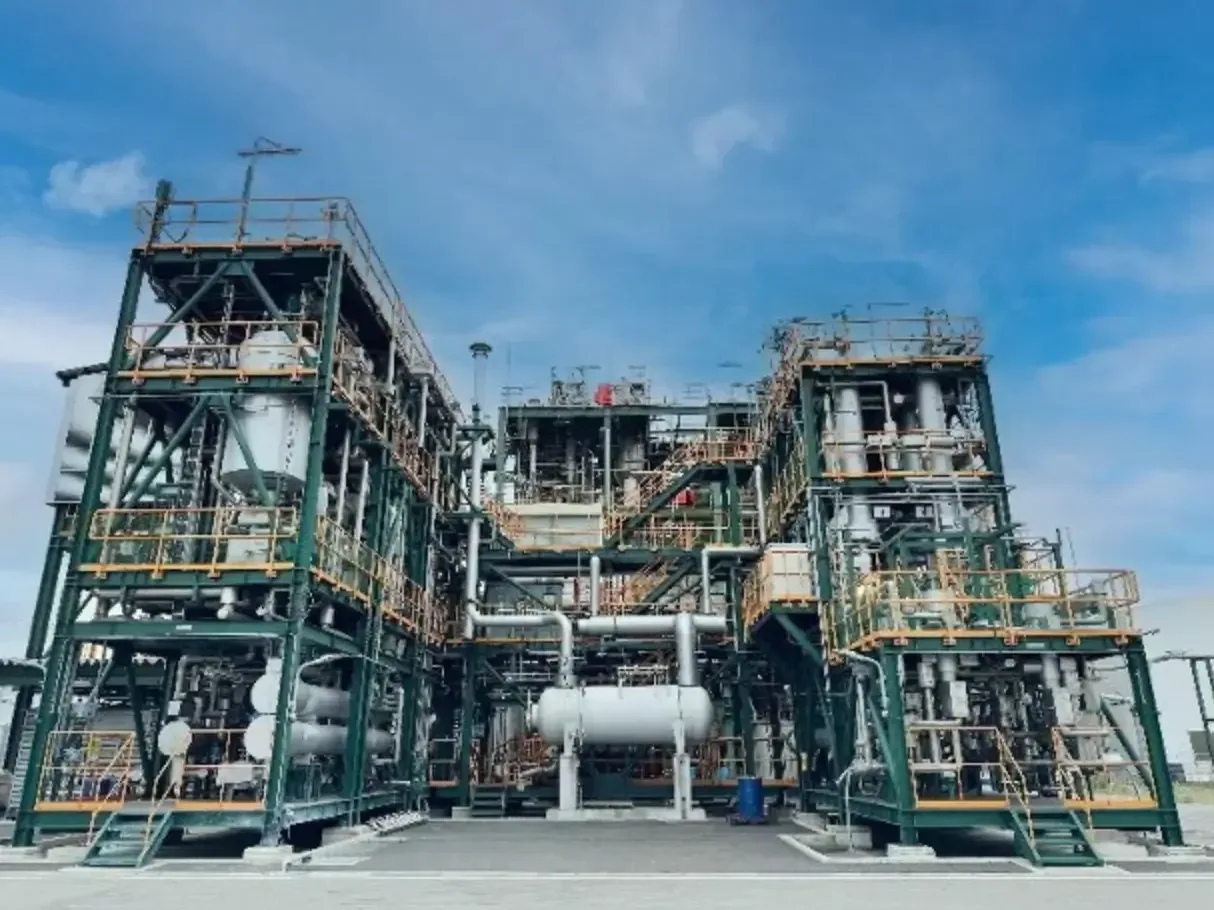
A breakthrough innovation that can be deployed on existing sites
This innovative process can be advantageously installed at industrial sites around the world that produce polyester for the textile industry, thereby enabling the substitution of fossil-based raw materials with their recycled equivalents.
Markets and deployment model
The technology, already proven and commercialised for recycling all PET packaging, including food-contact applications, is now validated for textile use under an exclusive license granted by IFPEN/JEPLAN to Axens worldwide to any industrial player wishing to develop local or regional textile-to-textile loops.
The PET recycled from this process is intended to be converted into yarn, fabric and then garments, thus completing the textile-to-textile loop for segments such as:
- sportswear and outdoor (heavy consumers of polyester);
- home furnishings (upholstery fabrics, curtains, covers);
- certain luxury applications that incorporate polyester in a controlled manner.
Enable the development of circularity
Approximately 60% of global textile production relies on polyester and other synthetic fibers, while less than 1% of fibers produced today come from genuine textiles recycled into textiles (Source : Materials Market Report of Textile Exchange).
In a world where volumes of textile wastes are rapidly increasing and where textile-to-textile recycling remains limited, this semi-industrial test provides concrete proof that a circular production of polyester can now be rapidly implemented on a significant scale, from post-consumer waste streams.
The Rewind® PET process thus fits into a global circular strategy. It offers textile manufacturers a concrete lever to reduce consumption of virgin materials and extend the products life cycle.
Moreover, the technology offers the shortest pathway (short loop) to recycle spent textiles with a positive impact on carbon footprint and cost.
Related News
-
Sustainability
Eight fashion brands commit to keeping deforestation out of packaging and textiles
-
Supplier News
Bandall success story: Cleanlease – Banding as the new standard in the textile sector
-
Technology
New technology turns flexible packaging waste into pyrolytic oil for food-grade plastics
-
Events
Materials, packaging materials and packaging aids: The full variety for all applications at interpack 2026
-
Business
Canada takes action on ‘forever chemicals’ in consumer products and packaging
Advertisement

Latest Packaging News

Grated cheese goes pocket-sized with limited-edition clip-on packaging
Kraft Natural Cheese has introduced Pocket Parm™, a limited-edition miniature version of its grated...
Truly Grass Fed updates packaging in response to consumer preferences
Truly Grass Fed has introduced a refreshed packaging design across its dairy product range, with a...
Miron® introduces refreshed brand identity and website
A new digital experience brings protective glass packaging, expertise, and inspiration together...
Raft of new exhibitors completes the UKPackaging EXPO 2026 line-up
A surge of newly confirmed exhibitors has finalised the floor plan for the highly anticipated...