Reusable recycled cups to be used at Eurovision Song Contest

Sustainability
A circular packaging initiative developed in Austria is being showcased during the 70th anniversary of the Eurovision Song Contest. The project involves a collaboration between Altstoff Recycling Austria (ARA), Borouge International, OMV and Greiner Packaging, with reusable cups made entirely from recycled plastic being used during the event in Vienna.
Around 100,000 reusable cups will be deployed at the main event and related official activities. According to the organisations involved, the project aims to demonstrate a closed-loop approach to plastics recycling, with all stages of the process carried out within Austria. The partners state that the initiative is expected to reduce the use of approximately five tonnes of virgin plastic.
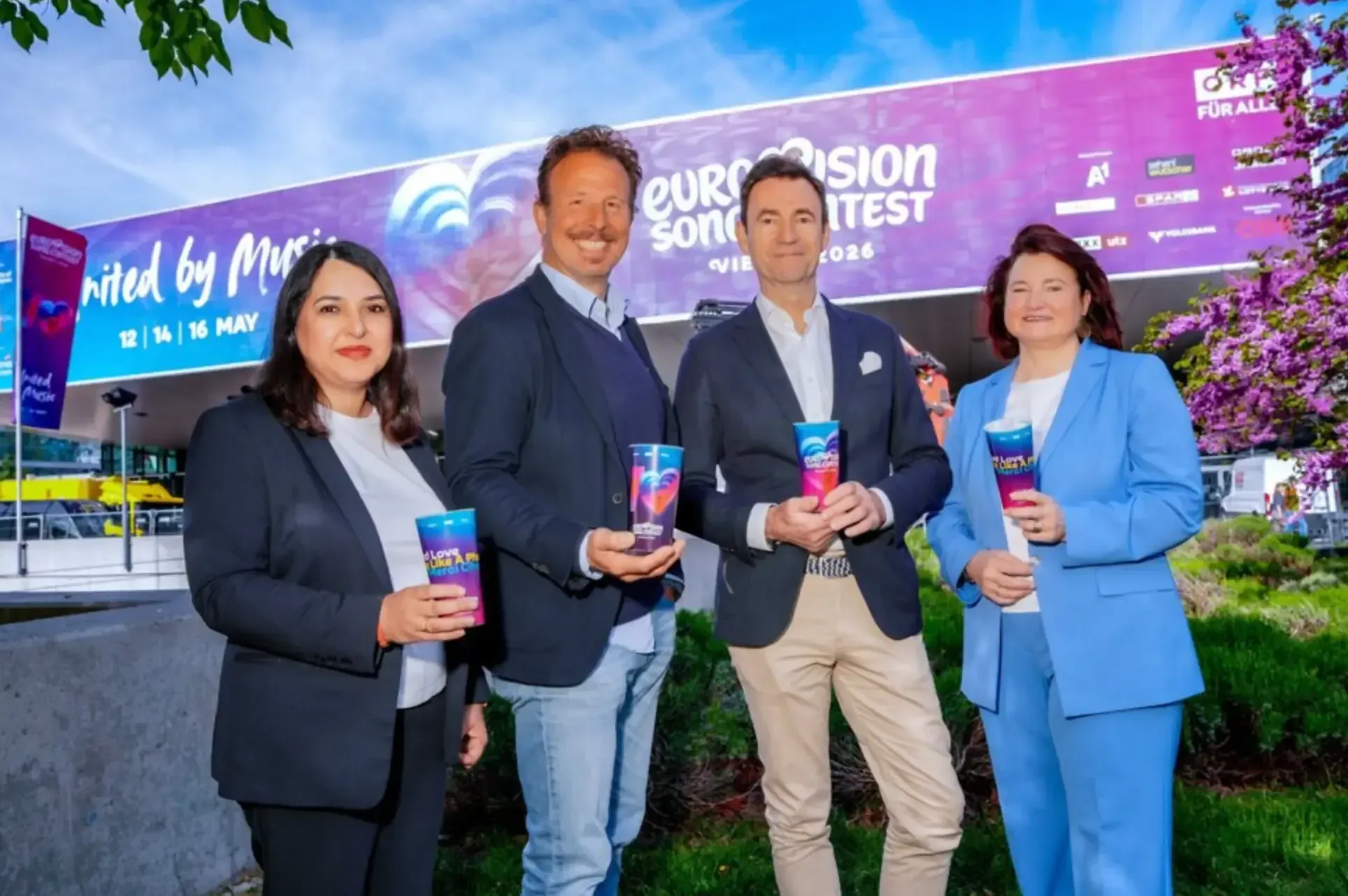
The cups are produced using post-consumer plastic packaging waste collected through Austria’s nationwide yellow bag and yellow bin recycling schemes, which operate across both urban and rural regions. After collection, the material is sorted and processed into plastic flakes by ARA.
These flakes are then supplied to OMV’s ReOil® facility, where they are converted into synthetic crude oil. The feedstock is subsequently used by Borouge International to produce food-grade plastic granules under its Borcycle™ C range. Greiner Packaging uses the material to manufacture reusable cups intended for food contact applications.
Closed-loop recycling is key to achieving high sustainability standards. Our Borcycle C portfolio, based on chemically recycled plastics, enables food-contact applications such as these reusable cups, even for highly demanding everyday uses.
Shanila Baseley, Vice President Sales at Borealis, now Borouge International.
The partners describe the process as a fully domestic recycling loop that transforms used plastic packaging into new products.
The cups are intended to help reduce waste generation during the Eurovision Song Contest by replacing single-use beverage containers. The project also benefits from shorter transportation distances due to the domestic supply chain, which the organisers say contributes to the event’s designation as a certified Green Event.
Each cup includes a printed QR code linking to DigiDot, a digital recycling guide developed by ARA. The platform is available in 25 languages and provides guidance on waste separation and local recycling collection points.
Following the event, cups that are damaged or no longer suitable for reuse will be recycled back into the system, while usable cups are expected to be donated to social organisations.
Related News
-
Sustainability
Reusable cup system supports waste reduction across NHS hospital cafés
-
Sustainability
Borealis and Messe Düsseldorf conclude successful reusable cup pilot at K 2025
-
Sustainability
Munich launches pilot scheme for reusable food containers
-
Sustainability
Lisbon launches new citywide reusable cup system “CopoMais”
-
Sustainability
Kansas City Chiefs launch stadium-wide reusable cup system
Advertisement

Latest Packaging News

Grated cheese goes pocket-sized with limited-edition clip-on packaging
Kraft Natural Cheese has introduced Pocket Parm™, a limited-edition miniature version of its grated...
Truly Grass Fed updates packaging in response to consumer preferences
Truly Grass Fed has introduced a refreshed packaging design across its dairy product range, with a...
Miron® introduces refreshed brand identity and website
A new digital experience brings protective glass packaging, expertise, and inspiration together...
Raft of new exhibitors completes the UKPackaging EXPO 2026 line-up
A surge of newly confirmed exhibitors has finalised the floor plan for the highly anticipated...