Automated cup return machines installed at German railway station

Sustainability
TOMRA has installed two automated return machines for reusable cups at Freiburg Central Station, marking the first integration of this type of infrastructure within an existing urban reuse system in Germany.
The machines have been deployed in collaboration with the RECUP network, enabling consumers to return cups without needing to visit participating cafés. The system allows users to deposit cups at any time, with refunds issued directly via digital payment methods. The machines are designed to automatically recognise compatible reusable cups, streamlining the return process.
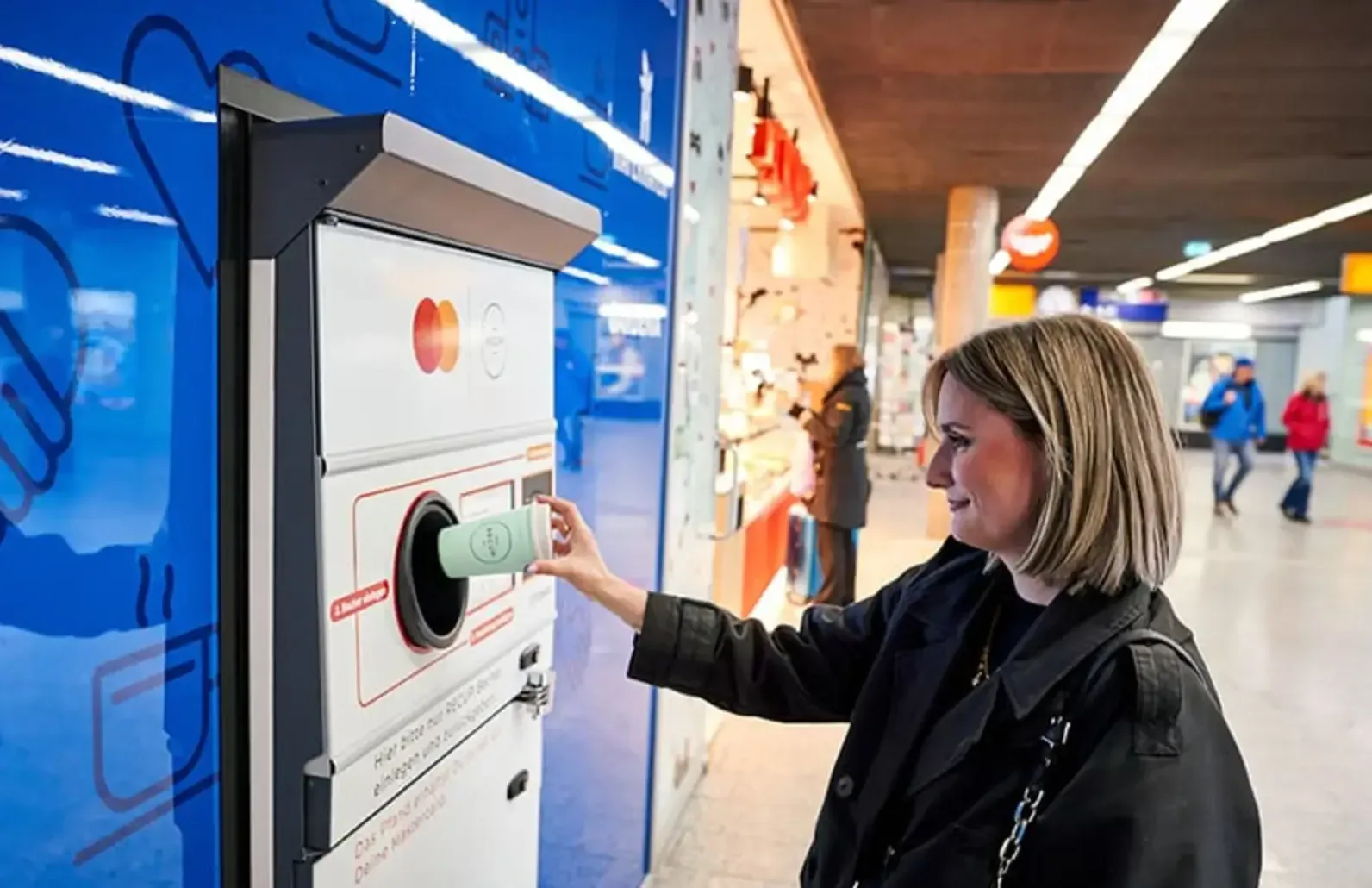
Freiburg has an established approach to reusable packaging, supported by a network of participating businesses and local policies that encourage reuse over single-use formats. The addition of automated return points at a high-traffic transport hub is intended to extend accessibility and improve convenience for users engaging in on-the-go consumption.
The technology underpinning the machines includes both the physical return units and a supporting digital platform. While currently configured to accept RECUP cups, the system is designed to accommodate additional reusable packaging formats, offering flexibility for future expansion.
According to TOMRA, automated return infrastructure can complement existing reuse schemes by increasing the number of return locations and reducing reliance on staffed collection points, without requiring entirely new systems to be developed.
Reusable solutions work best when returning is just as easy as using. Freiburg shows how automated returns can meaningfully enhance existing reusable systems. For cities, this is a crucial point: promoting reusables or making single-use less attractive isn't enough. The right infrastructure is needed so consumers can naturally integrate reusables into their daily lives.
Sven HennebachSenior Manager, TOMRA Reuse.
The company has previously deployed similar solutions in Aarhus, where a network of more than 30 return machines has been in operation since early 2024. Reported data from that project indicates high return rates and significant usage across the system.
The Freiburg installation represents an early example of how automated infrastructure can be integrated into established reuse networks within urban environments.
This article was originally published by TOMRA.
Related News
-
Sustainability
The British Library implements returnable cup scheme with Circular&Co
-
Sustainability
Football stadium coffee cup collection supports recycling initiative
-
Sustainability
Reusable cup system supports waste reduction across NHS hospital cafés
-
Sustainability
Munich launches pilot scheme for reusable food containers
-
Sustainability
Lisbon launches new citywide reusable cup system “CopoMais”
Latest Packaging News

Collectible coffee cans feature characters from Marvel's Avengers: Doomsday
Coffee brand happy has partnered with Marvel Studios to introduce a limited-edition range of...
NIVEA Creme tin now contains 95% recycled aluminium
Novelis and Beiersdorf have announced that the NIVEA Creme tin is now manufactured using 95%...
Syntegon launches Annex 1 Roadshow to bring solutions to pharma customers
Syntegon, a strategic lifecycle partner to the pharmaceutical, biotech, and food industries, has...
Alupro publishes independent econometric review of the UK PRN market
Alupro has released an in-depth econometric analysis of the Packaging Recovery Note (PRN) market,...