Tetra Pak invests to further boost recycling across EU
Supplier News
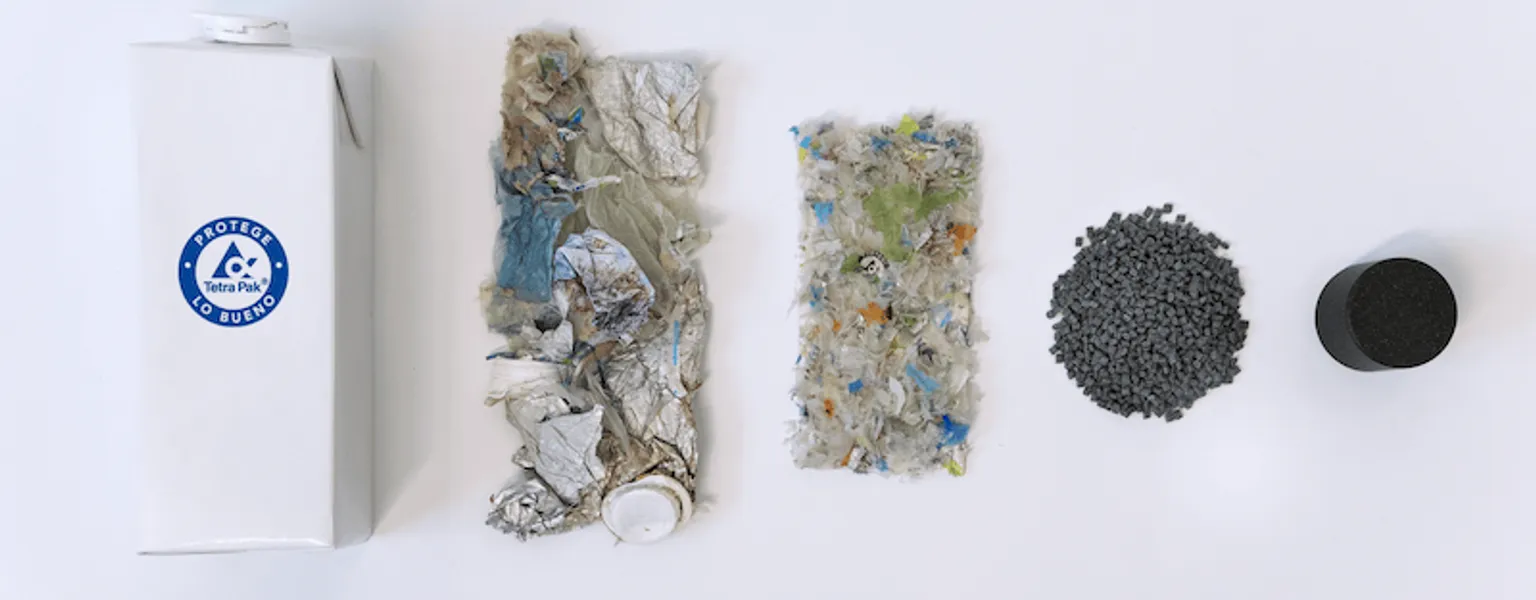
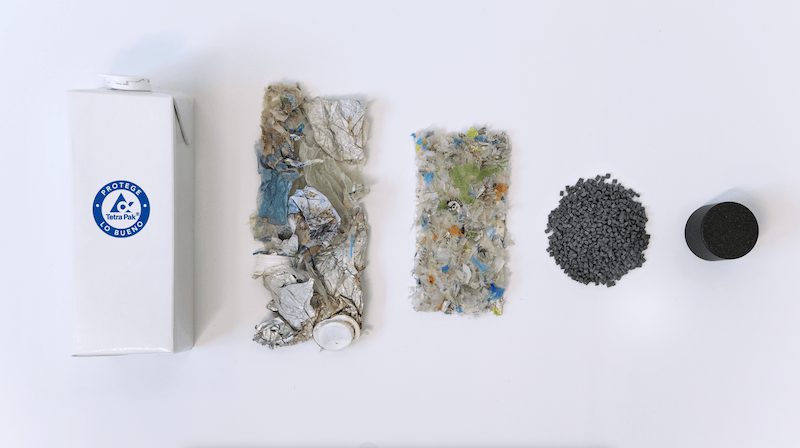
Tetra Pak is announcing several strategic investments designed to level up the recycling capacity for carton packages in the European Union (EU). The move supports the goals of the proposed EU Packaging and Packaging Waste Regulation (PPWR), by ensuring that all packaging components are recycled and valuable raw materials are kept in circulation for longer, therefore showcasing the pivotal role of recycling in the green transition of the food packaging sector.
In 2023, Tetra Pak invested nearly €40 million to accelerate beverage carton recycling worldwide and plans to increase this even further over the coming years to achieve greater material circularity. The recent initiatives and investments are set to boost the EU’s ability to recycle beverage cartons, including the non-fibre protective layers of polyethylene and aluminium, known as ‘polyAl’. This will be achieved by either unlocking new collaborations or by strengthening the capabilities of established recyclers to turn all materials from post-consumer cartons into new high-quality resources and goods. These add to the existing and well-established recycling infrastructure in the EU, where beverage cartons are recycled in 20 specialised paper mills, with polyAl currently processed by seven facilities (and a further six under development).
Major investments in 2023 include:
- In Sweden, Tetra Pak and Axjo Group have begun a feasibility study to build a new recycling line for polyAl that will accommodate volumes from Sweden, Denmark and Norway. Fostered by a joint investment of up to €24 million and featuring an annual recycling capacity of 10,000 tonnes, this state-of-the-art facility will recycle and incorporate polyAl into injection moulded plastic products made by Axjo, including cable drums, reels, spools and plastic storage boxes.
- In Spain, Tetra Pak and Trans Sabater have co-invested over €2 million and expanded their agreement to increase installed polyAl recycling capacity from 3,000 tonnes to 10,000 tonnes per year. This valuable secondary raw material has unique thermal properties for increased productivity in plastic transformation processes and is exempt from the plastic tax, as it is a 100% recycled material of post-consumer origin. In addition, Trans Sabater’s patented mechanical recycling technology improves the quality of the pellets compared to traditional processes. Potential end markets for recycled polyAl are many, including logistics, packaging, retail and gardening.
- Also in Spain, Tetra Pak and Alier have forged a collaboration that will consolidate Alier as one of the largest post-consumer carton recyclers in Europe and will help the company to become an integrated player, able to process all materials from used beverage cartons. Using mechanical recycling, the polyAl will be transformed into high-quality pellets, suitable for a variety of end markets. The ambition is to recycle over 15,000 tonnes of polyAl, per year, by 2025.
- In the Netherlands, Tetra Pak has invested €1 million in Recon Polymers’ polyAl recycling plant, in a bid to increase the capacity to at least 8,000 tonnes per year. It will not only improve the efficiency of the process but specifically advance material circularity across France, Belgium and the Netherlands. The material’s versatility means it can then be transformed into a range of everyday items including reusable pallets, interiors and large-format 3D printed objects.
Markus Pfanner, Vice President Sustainability Operations at Tetra Pak, comments: For us, this goes beyond industry investment. It’s part of the transformation towards a circular economy and an investment in the future of the planet. These innovative collaborations, at the intersection of human ingenuity, technology and finance, demonstrate the value of beverage cartons within sustainable food systems. Beverage cartons are recyclable. They are recycled wherever the necessary collection, sorting and recycling infrastructure is in place, at scale, so naturally, expanding this infrastructure is a priority for us. Projects such as these ensure that consumers can continue to safely access food, and that once they have done so, those cartons can be recycled, keeping quality resources in the loop and reducing the use of virgin content.
This article was originally published by Tetra Pak.

Related News
-
Sustainability
Paper-based ice cream wrap moves towards commercial rollout
-
Supplier News
Tetra Pak and Sterilgarda Alimenti launch 'industry-first' 1-litre aseptic carton with paper-based barrier
-
Business
Tetra Pak and García Carrión launch 'world-first' paper-based barrier for juice packaging
-
Supplier News
Tetra Pak launches new automation and digitalisation solutions for the food and beverage industry
-
Supplier News
Costco to sell planters made from recycled cartons in collaboration with Tetra Pak & Keter
Latest Packaging News

Barrel-shaped packaging introduced for bourbon-inspired dog treats
Holladay Distillery has introduced barrel-shaped packaging for its new Bourbones dog treats,...
Corona Cero introduces seven-bottle pack inspired by days of the week
A new seven-bottle packaging format has been developed for Corona Cero, the alcohol-free beer brand...
Paramount Packaging Systems gives UK manufacturers first look at FUJI Alpha X
Paramount Packaging Systems, the exclusive UK and Ireland distributor of FUJI flow wrapping...
PHS: A practical guide to buying industrial pallet wrapping machines in the UK
The fastest pallet wrapper is not necessarily the right one for your operation. An industrial...