Spectra: The better choice – Direct printing vs. labelling

Supplier News
The pros and cons of direct printing onto plastic bottles over traditional labelling have long been debated. While both methods serve the purpose of branding and information display, the advantages of direct printing are compelling.
Spectra’s dedicated in-house print capability can provide a range of innovative solutions for brands wishing to move away from labelling their packaging.
As customers continue to explore responsible ways to package their goods, it’s also worth considering the environmental impact of branding those products.
Although many customers opt for labelling their bottles, this process can raise some environmental questions worth considering compared to printing directly onto a pack.
For example, printing directly can avoid using potentially non-compatible label materials that may hamper the recycling process. This can prove problematic if the label needs to be removed before the bottle is recycled again for further use.
Printing directly onto a pack can also reduce expensive wastage. Because Spectra manages any waste, customers get the exact amount of products they ordered, with imperfect products segregated out for recycling. However, a filled bottle with an imperfect label is often scrapped, proving commercially expensive and environmentally wasteful.
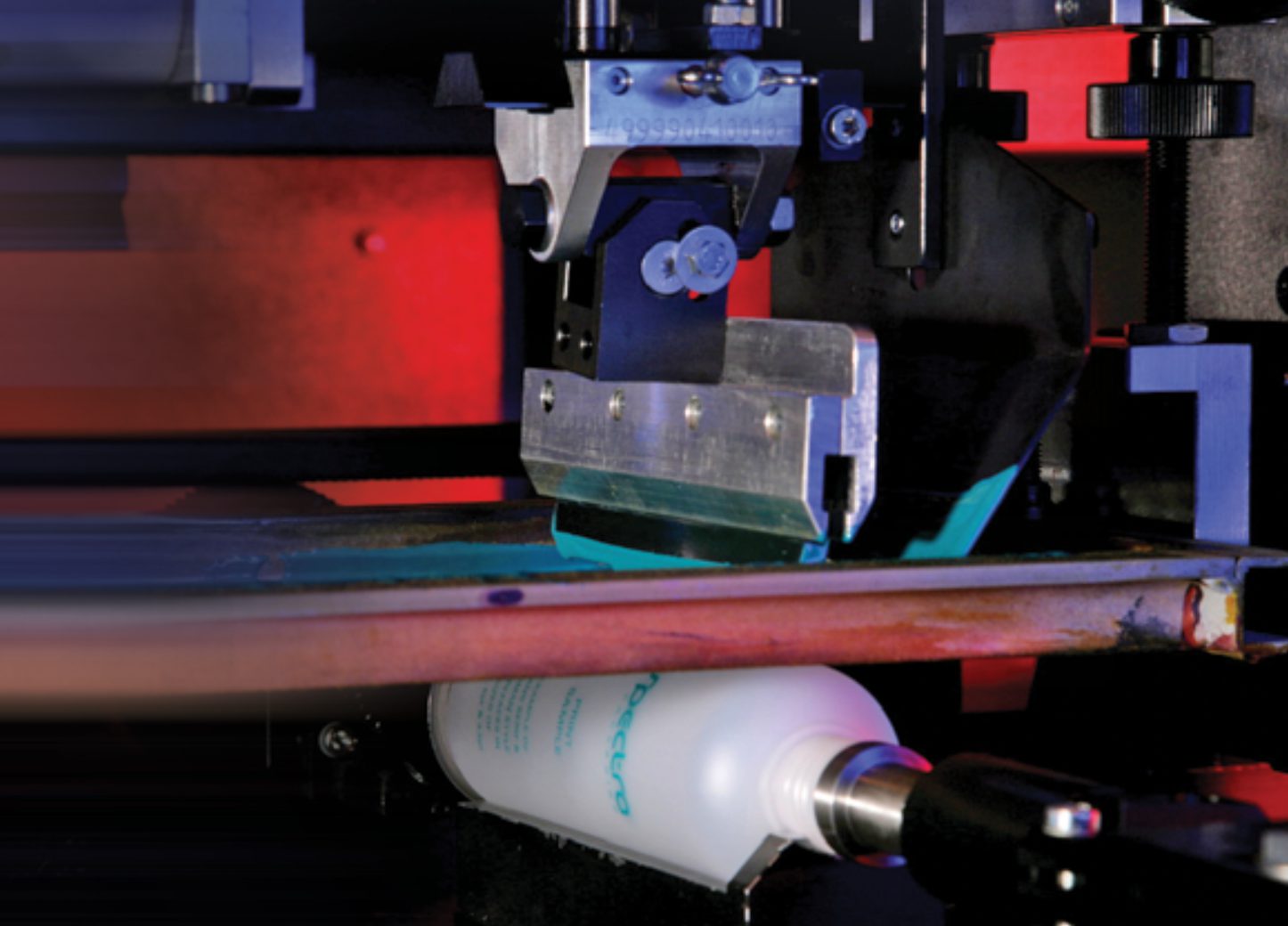
As a responsible manufacturer, Spectra constantly reviews its processes to ensure we mitigate environmental impacts at every opportunity. One such example is our dedicated decoration department has transitioned from conventional UV curing practices to carbon-efficient LED curing technologies.
Jonathan Powell, Sales Director at Spectra, said: Because we boast a dedicated print facility, customers can enjoy several environmental benefits. We can mould and decorate bottles under one roof, minimising the need for additional processes and unnecessary transportation. Moreover, printing adds virtually no additional gram weight to products, an important factor to consider when looking to reduce one’s carbon footprint.
In addition to the environmental benefits direct printing offers, there are other factors to consider.
For example, direct printing is durable against scuffing, weather, UV light, and water resistance, and it provides a superior finish to labelling, particularly for brands seeking a premium packaging appearance. With no unsightly air pockets, wrinkles or bubbles that can detract from the quality of the design, direct printing creates a higher perceived value for products.
Over recent years, Spectra has developed a wide range of print finishes to give brands genuine differentiation in acutely competitive markets. In addition to pin-sharp 4 pass silk-screen printing and premium-look hot foil blocking, Spectra has also been at the forefront of pioneering numerous innovative print finishes, including 360-degree circumference seamless printing, UV anti-counterfeiting inks, colour-changing effects, and high-build braille print.
Jonathan said: We firmly believe printing directly onto a pack provides a better finish to a customer’s pack than labelling. Because our in-house service eliminates the inconvenience of having to liaise with more than one supplier, there is greater alignment with production control, quality and lead times.
This article was originally published by Spectra Packaging.

Related News
-
Supplier News
Spectra: Give your products a competitive edge
-
Supplier News
Spectra: New glass import tariffs – is it time to re-evaluate your packaging choices?
-
Supplier News
Spectra unveil new PET jar as part of bold 55% recycled content initiative
-
Supplier News
Spectra to showcase latest sustainability innovations at London Packaging Week
-
Supplier News
Spectra begins a new chapter as an employee owned business
Latest Packaging News

Spectra: Give your products a competitive edge
With clean lines, balanced proportions and four faces for optimal branding, Spectra’s Square Range...
NPP: 2D Coding – bringing benefits and opportunities to the supply chain
The traditional barcode is an instantly recognisable feature on retail packaging, providing...
Croxsons: Can English and Welsh wine develop its own packaging identity?
English & Welsh Wine is comparatively young to Champagne, but does the continued growth offer...
UK aluminium industry calls for action on industrial competitiveness and investment in new ALFED report
New white paper highlights £3.78 billion direct economic contribution and sets out five priorities...