Bandall: Banding vs cardboard sleeves – the difference in weight

Supplier News
When it comes to packaging, every gram matters. The weight of a packaging solution has a significant impact not just on its appearance, but also on its performance, cost, logistics, and sustainability.
When comparing cardboard sleeve packaging to banded packaging, the weight differences are more impactful than you might think. These seemingly similar packaging options reveal their true distinctions when we dig deeper into how weight affects material usage, storage, transportation, and environmental impact. Let’s explore how weight plays a crucial role in shaping the efficiency and eco-friendliness of each solution.
Less weight, smaller footprint
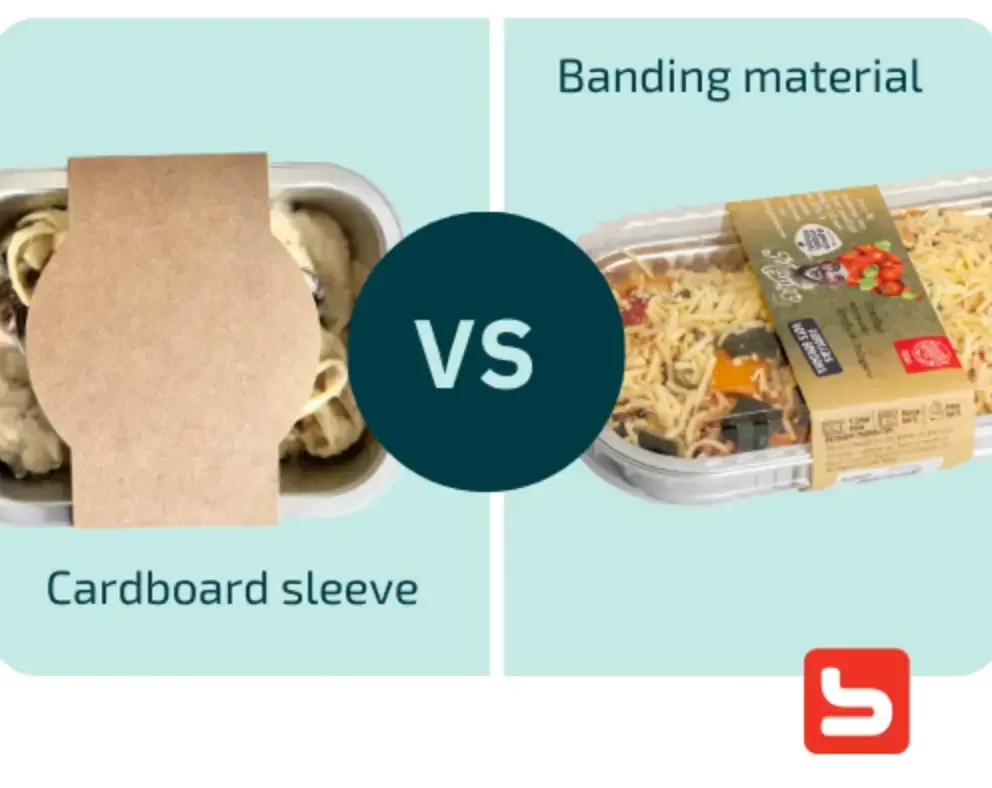
A key difference between cardboard sleeves and bands is how much they weigh. Bands are made from lightweight materials like paper or film, making them slimmer and more compact. Cardboard sleeves, on the other hand, are thicker and heavier resulting in bulkier packaging. As a result, when branding and labeling a product with a cardboard sleeve, a significant amout of extra weight is added. Bands offer the same results but with much lighter and thinner materials.
More coverage, more weight
The weight difference between cardborad sleeves and bands goes beyond material thickness and makeup. It's also about how much material is needed to package the product. Cardboard sleeves are designed to cover a large portion of the product. It, therefore, requires more material and consequently increases the overall weight of the packaging.
Unlike sleeves, bands are slim and only wrap around a small part of the product. That means they use much less material, keeping the added weight to a minimum. Plus, bands enhance product visibility because they only cover a small section.
Material costs and waste
Packaging weight doesn’t just affect how a product looks. It also impacts costs and sustainability of the product. Cardboard sleeves use more material, which means higher production costs and more waste. Since they’re made from thick cardboard, recycling them takes more effort and can lead to higher recycling fees and packaging taxes.
Bands, on the other hand, use less material, which lowers both production costs and waste. This helps reduce disposal fees and supports eco-friendly packaging. Plus, bands can be made from paper or film, making it easier to achieve mono-packaging. This is when products are packaged using one type of material to optimize recycling.
Transport and storage
Weight also has a significant impact on transport and storage of your products. Cardboard sleeves take up more room in storage and during transport due to their thickness and bulky format. This means more space and generally end up with higher costs.
Bands, on the other hand, are lightweight and compact, making them a space-saving solution. Their streamlined design reduces storage demands and optimizes transport loads. As a result, it cuts down logistics expenses and improves overall efficiency.
Sustainability
Packaging sustainability is also greatly affected by packaging weight. Bands, crafted with fewer materials, generate less waste and a smaller ecological footprint. This reduces the amount of waste that needs to be recycled or disposed of and lowers the environmental burden.
In contrast, cardboard sleeve packaging consumes more resources during production, resulting in higher waste levels and a greater environmental impact. The increased waste requires more recycling efforts, further straining the environment.
The lighter packaging solution
Weight is a significant factor when comparing bands to cardboard sleeve packaging. While both options serve important purposes, the differences in weight have notable impacts on material usage, transport, storage, and sustainability. Bands, with their lighter and more compact design, offer distinct advantages in these areas and provide an efficient and eco-friendly packaging solution.
This article was originally published by Bandall.

Related News
-
Supplier News
Bandall: Linerless labeling for ready meals – An alternative to adhesive labels
-
Supplier News
Bandall: How printing companies can bundle more efficiently
-
Supplier News
Bandall: 5 reasons to use banding for skin packaging
-
Supplier News
Bandall: A smarter way to label meat packaging
-
Supplier News
Bandall: Banding vs labels or stickers – which offers better tamper-evident packaging?
Latest Packaging News

Grated cheese goes pocket-sized with limited-edition clip-on packaging
Kraft Natural Cheese has introduced Pocket Parm™, a limited-edition miniature version of its grated...
Truly Grass Fed updates packaging in response to consumer preferences
Truly Grass Fed has introduced a refreshed packaging design across its dairy product range, with a...
Miron® introduces refreshed brand identity and website
A new digital experience brings protective glass packaging, expertise, and inspiration together...
Raft of new exhibitors completes the UKPackaging EXPO 2026 line-up
A surge of newly confirmed exhibitors has finalised the floor plan for the highly anticipated...