Toilet paper packaging features US national park-inspired wrapper designs

Sustainability
Who Gives A Crap has renewed its collaboration with Parks Project, bringing back the limited-edition Parks Edition toilet paper collection inspired by the landscapes of the United States' national parks.
The collection follows the brands' previous partnership and features 12 wrapper designs displaying photography by Breakfast for Dinner, showcasing a range of national parks across the US. The companies say the initiative aims to highlight the country's natural landscapes while supporting their shared environmental objectives.
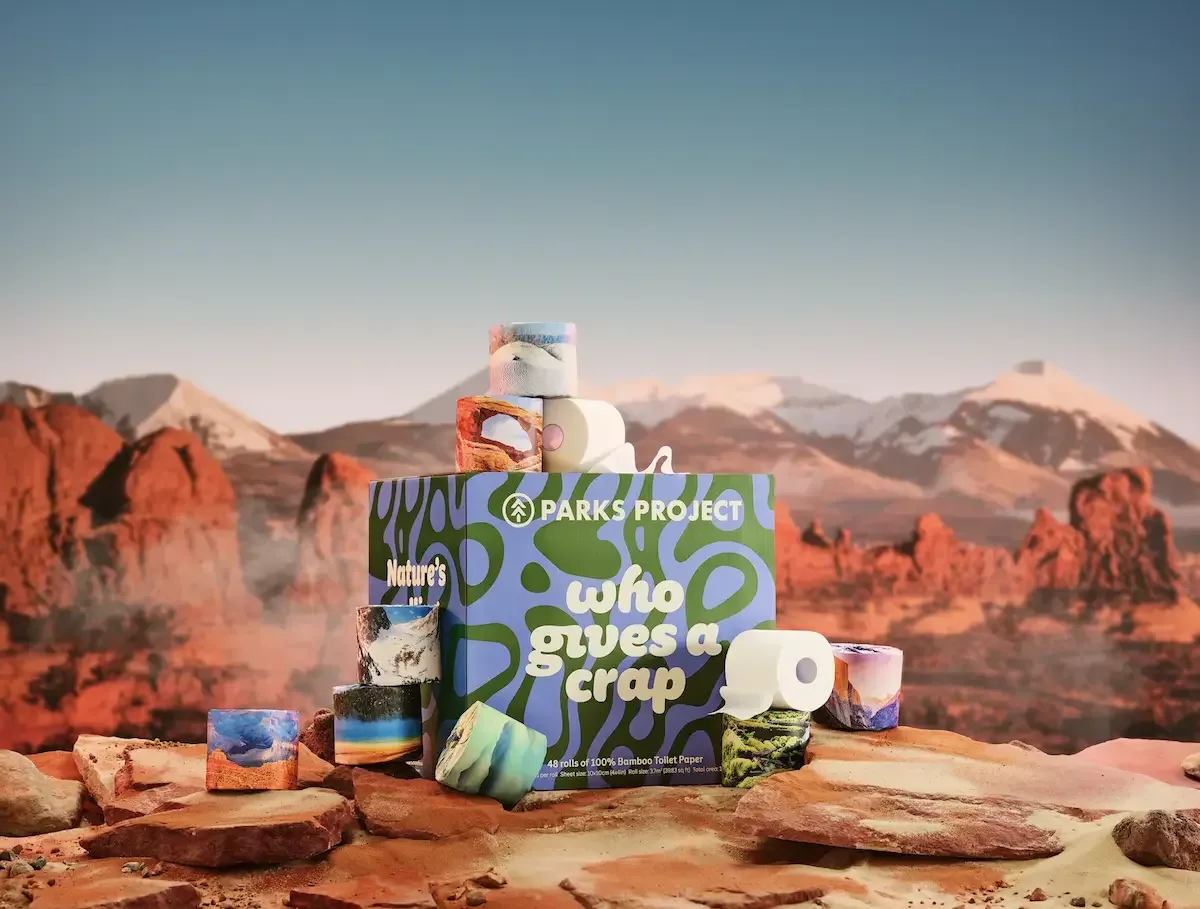
Parks Project is focused on supporting the protection and preservation of public lands through its products, while Who Gives A Crap promotes toilet paper made from alternative fibre sources as part of its sustainability strategy.
Seeing how enthusiastically people embraced the Parks Edition last year made bringing it back an easy decision. This partnership is about more than beautiful packaging. It's about celebrating the places we love while showing how everyday choices can help protect forests and support communities around the world.
Danny Alexander, Co-Founder and Chief of Product & Purpose at Who Gives A Crap.
The Parks Edition contains the company's 100% bamboo toilet paper, which is presented as an alternative to conventional virgin fibre toilet tissue. According to Who Gives A Crap, bamboo can help reduce reliance on virgin forests used in traditional toilet paper production.
The limited-edition collection is available exclusively through the company's website while stocks last.
Related News
-
Business
Nature Valley launches US national park-inspired packaging
-
Sustainability
US government reverses national parks phase-out of single-use plastics
-
Sustainability
World’s most modern tissue mill inaugurated in Sweden
-
Sustainability
Tesco repurposes cardboard for toilet rolls and kitchen towels
-
Sustainability
Resilient in uncertain times, pulp and paper sector continues to lead on sustainability and decarbonisation, new data shows
Latest Packaging News

Raft of new exhibitors completes the UKPackaging EXPO 2026 line-up
A surge of newly confirmed exhibitors has finalised the floor plan for the highly anticipated...
Registration now open for Packaging Innovations & Empack 2027
The UK packaging and processing community will return to the NEC Birmingham on 24 & 25...
Clean and dry, every time: How SUPER DRY helps protect premium egg quality
For high-quality egg suppliers, appearance matters. Even minor shell or quality defects can affect...
Rowlinson Packaging: The hidden cost of product damage and why industrial packaging matters
For many businesses, packaging is often viewed as a procurement decision focused primarily on cost....