Autopack: What is blow moulding? A complete guide

Supplier News
Blow moulding is a manufacturing process used to produce hollow plastic products, particularly bottles and containers. It’s widely used in packaging production, from drinks bottles to containers for food, cleaning products and cosmetics.
This guide explains how blow moulding works, the different methods and materials used, its main applications and the advantages and limitations manufacturers should consider.
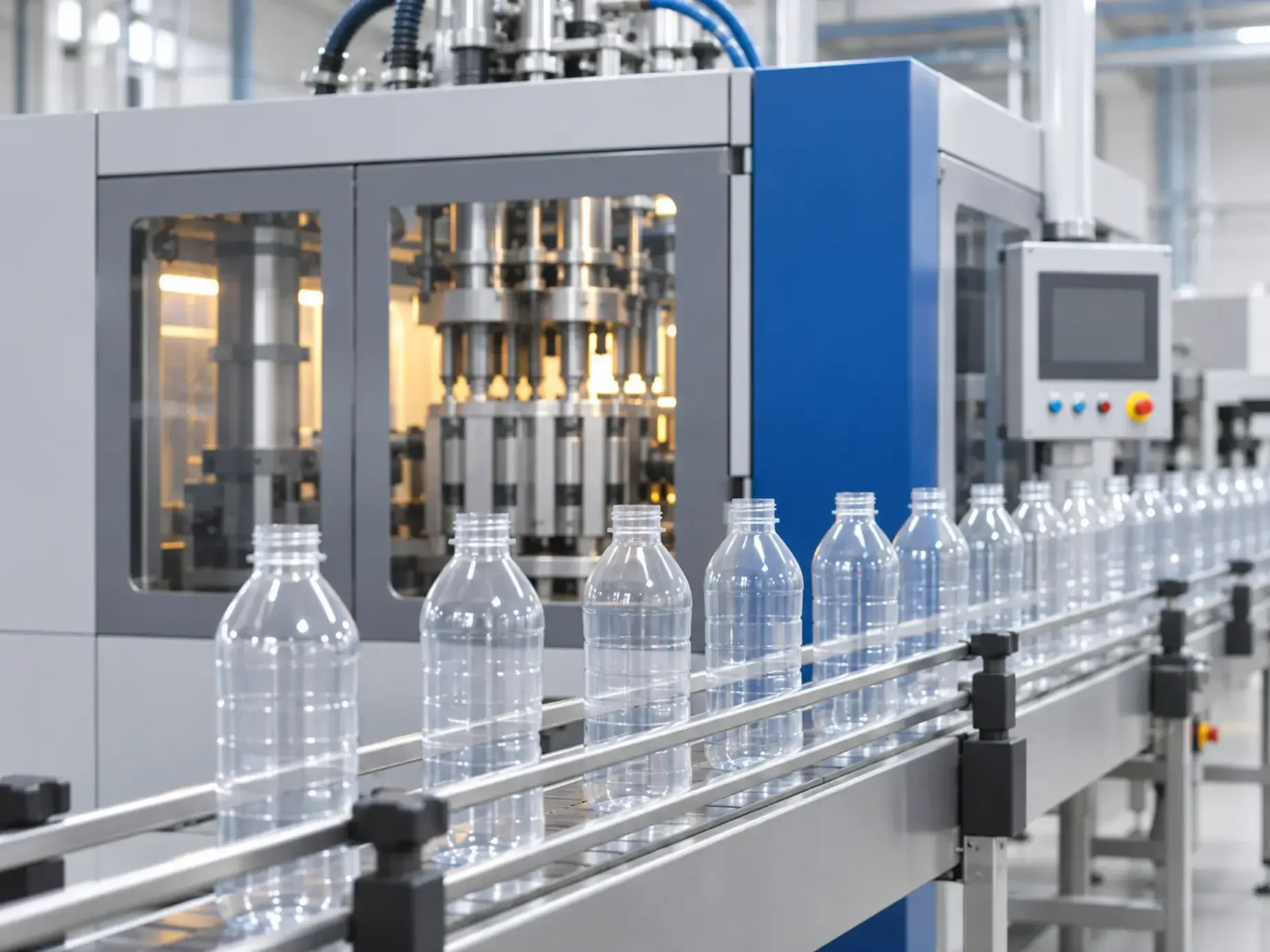
What is blow moulding?
Blow moulding works by using compressed air to expand heated plastic inside a mould, creating the required shape as the material cools. It’s a technique for shaping plastic using heat, compressed air and a mould. The heated plastic is expanded against the walls of the mould cavity, then cooled to create a hollow product with the required shape and dimensions.
Blow moulding works by using compressed air to expand heated plastic inside a mould, creating the heat and compressed air to expand softened plastic against the walls of a mould cavity. The plastic then cools to form a hollow product with the required shape and dimensions.
The process is particularly suited to manufacturing plastic bottles and containers in large quantities, where consistent dimensions and repeatable production are important.
Unlike injection moulding, which injects molten plastic directly into a mould cavity to form components, blow moulding uses air pressure to create hollow parts.
What are the three types of blow moulding?
There are three main types of blow moulding, each suited to different materials, container designs and production requirements.
Injection Blow Moulding
Plastic is injection moulded around a core pin to produce a preform, which is then transferred to a blow mould and inflated. This method is useful for smaller containers where precise neck dimensions are important.
Extrusion Blow Moulding
Molten plastic is extruded into a hollow tube called a parison. A mould closes around the parison before compressed air expands it into the required shape. This process is commonly used for HDPE bottles and containers.
Stretch Blow Moulding
A heated preform is stretched lengthways before being expanded using compressed air. This method is widely used to produce PET bottles, including drinks packaging.
The history of blow moulding
Blow moulding has its roots in traditional glass blowing, where air is used to shape heated material. Modern blow moulding technology developed during the 1930s and was subsequently adapted for plastic container production.
As plastic packaging became more widely adopted, the process developed into an established method of manufacturing bottles, containers and other hollow products at scale.
What is the blow moulding process?
The blow moulding process involves preparing plastic, forming it into a suitable starting shape and using compressed air to expand it inside a mould. Once the plastic has cooled sufficiently, the finished part can be removed.
What are the four stages of blow moulding?
1. Pick Your Material
Before the moulding begins, you need to select which material you’ll use, as it will affect the performance of the finished product. Once you’ve chosen, the material will need to be properly prepared to ensure it’s ready for moulding.
2. Create the Preform
The starting form depends on the process: extrusion blow moulding uses a parison, while injection and stretch blow moulding use preforms.
3. Inject the Compressed Air
Now, with your preform ready, heat will be applied to soften it and prepare it for the application of pressurised air. The air will force the softened preform to conform to the shape of your mould, quite literally breathing life into your design.
4. Remove Your Product
Allow the container to cool sufficiently inside the mould before opening it and removing the finished product.
In modern production environments, these four steps are handled by automated blow moulding machines, which take your product from preform to ready-to-use container, ensuring maximum accuracy and efficiency.
What is a blow moulding machine?
A blow moulding machine controls the heating, moulding, compressed-air and cooling stages required to produce hollow containers. Different methods are used depending on the material, bottle design and required production output.
These machines can operate independently or integrate with filling, capping and downstream packaging equipment.
Autopack supplies blow moulding machines to suit different production requirements. Learn more about the benefits of bringing bottle production in-house.
What is blow moulding used for?
Common use cases include:
- Drinks bottles for water, soft drinks and other beverages
- Bottles and containers for edible oils
- Detergent bottles and household cleaning-product packaging
- Shampoo, conditioner and other personal-care bottles
- Cosmetic and toiletries packaging
- Larger plastic containers, including designs with integrated handle.
Industrial containers for suitable chemicals and other products
The process is also used outside packaging manufacturing, including for certain automotive components, toys and other hollow plastic parts.
Which industries use blow moulding?
These containers serve food and drinks, cosmetics, personal care, household cleaning, chemical manufacturing and industrial packaging. Blow moulding is also used for selected automotive components.
We’ve also worked with SIDE on blow moulded packaging for personal and home care.
What are the advantages of blow moulding?
For manufacturers producing hollow plastic containers, blow moulding offers several advantages:
- Design flexibility: The process can produce bottles and containers in various shapes and sizes, including certain designs with handles.
- Efficient production: Automated blow moulding machines can support high-volume container production.
- Material efficiency: The process can produce lightweight hollow containers, with material use influenced by the chosen method and product design.
- Repeatable results: Once the machine and process are correctly configured, blow moulding supports consistent production of containers.
- Production line integration: Blow moulding equipment can be connected with filling, capping and container handling machinery.
For suitable applications and production volumes, these advantages can make blow moulding a cost-effective manufacturing process.
What are the disadvantages of blow moulding?
Although blow moulding is widely used, it isn’t suitable for every plastic product or production requirement. Some important considerations include:
- Initial investment: Blow moulding machinery and mould tooling involve upfront costs, which need to be assessed early on in the project.
- Design limitations: Blow moulding is intended for hollow products and may not be appropriate where solid parts, intricate features or tight tolerances are required.
- Wall thickness control: Achieving consistent material distribution can require careful design and process control.
- Production economics: Running costs, changeover requirements, container formats and production volume all affect the financial suitability of the process.
Material compatibility: Not every polymer is suitable for every blow moulding method or machine.
What materials can be blow moulded?
Blow moulding uses thermoplastic polymers, with material choice depending on the process, intended contents, chemical compatibility, strength, clarity and barrier requirements. Common packaging materials include:
- PET (polyethylene terephthalate): Used for drinks bottles and other durable packaging.
- HDPE (high-density polyethylene): Commonly used for detergent bottles, personal-care packaging and larger containers.
- LDPE (low-density polyethylene): Used where greater flexibility is required in the finished product.
- PP (polypropylene): Suitable for certain containers where chemical and temperature-related properties are required.
- PVC (polyvinyl chloride): Used in some blow moulding applications, although its suitability depends on the product and manufacturing requirements.
Which polymer is used for blow moulding?
There isn’t one single polymer used for blow moulding. PET and polyethylene grades, particularly HDPE, are among the most common materials for plastic bottle and container production.
PET is frequently used in stretch blow moulding, while HDPE is commonly processed using extrusion blow moulding.
Choosing a blow moulding machine for your production line
Choosing the right blow moulding machine depends on your container requirements, production targets and existing equipment.
Before making a decision, consider:
- The container specifications, including size, shape, capacity and neck finish
- Whether you’re working with PET, HDPE or another polymer.
- The required output and frequency of product changeovers.
- Available floor space, compressed air and electrical supply.
- Whether the machine needs to connect with filling, capping or conveying equipment.
At Autopack, we work with manufacturers to specify suitable blow moulding machines from SIDE and integrate them into wider packaging lines where required. Call 01432 677 000 or email info@auto-pack.co.uk to discuss your bottle production requirements.
This article was originally published by Autopack.

Related News
-
Supplier News
Autopack: How to balance speed and flexibility in a packaging line
-
Supplier News
P&B (Foods) boosts sauce production with 200-bottle-per-minute Autopack line
-
Supplier News
Autopack: A guide to nutraceutical packaging equipment and pack formats
-
Supplier News
Autopack: What is a sealing machine and how does it work?
-
Supplier News
Autopack Group launches new division Autoweigh at PPMA Show with smallest ever multihead weigher
Latest Packaging News

Autopack: What is blow moulding? A complete guide
Blow moulding is a manufacturing process used to produce hollow plastic products, particularly...
PHS: Reducing carbon footprint with packaging automation methods
Packaging waste is not the only emissions lever on a packing line. Reducing carbon footprint with...
EU ban on plastic waste exports to non-OECD countries comes into effect
The European Union has introduced a ban on plastic waste exports to countries outside the...
Experts highlight packaging waste concerns ahead of Black Friday
Black Friday could generate an additional 1.5 million tonnes of waste in the UK, including 700,000...