Two days off-site: How pharma teams decide which events are worth it

Events
Pharmaceutical companies increasingly question where their event budgets deliver a genuine return. Open exhibitions and closed-door events look similar on paper - booths, sessions, badges - but the data behind them tells two very different stories, with direct implications for how manufacturing, quality and procurement teams plan their calendars.
Open exhibitions attract visitors who browse, compare suppliers and gather information for decisions they may make months later. Research from the exhibition industry body CEIR finds that the large majority of participants come to see new products and compare suppliers rather than to make decisions on the spot. The conversion numbers confirm the pattern: booth-based contacts at open exhibitions convert to closed business at roughly 1.9%, while pre-scheduled meetings at closed-door events convert at around 13%, according to industry benchmarking cited across event-analytics platforms including Vendelux.
The gap has a structural explanation. B2B purchasing decisions of any complexity typically involve more than a dozen stakeholders, according to Forrester, and in technical procurement that number can reach 25. A supplier standing at an exhibition booth has no way to know whether the person walking past holds budget authority or influence over the specification, and with thousands of visitors moving through a hall, the odds of a relevant match occurring by chance remain low regardless of overall footfall. Closed-door events invert the problem: delegate numbers are capped, and participants are verified and matched against stated objectives before the event begins, so the room is deliberately narrow rather than broadly representative.
Cost per lead at live exhibitions is among the highest in B2B marketing - Cvent's 2026 benchmarking puts it at up to $811 - and up to 80% of exhibition leads reportedly receive no follow-up at all. For a technical buyer the cost reads differently: two days off-site, a flight and a hotel, spent on conversations that may or may not involve anyone with a mandate. Without a clearly quantified return, that arithmetic is increasingly difficult for procurement and marketing teams to defend.
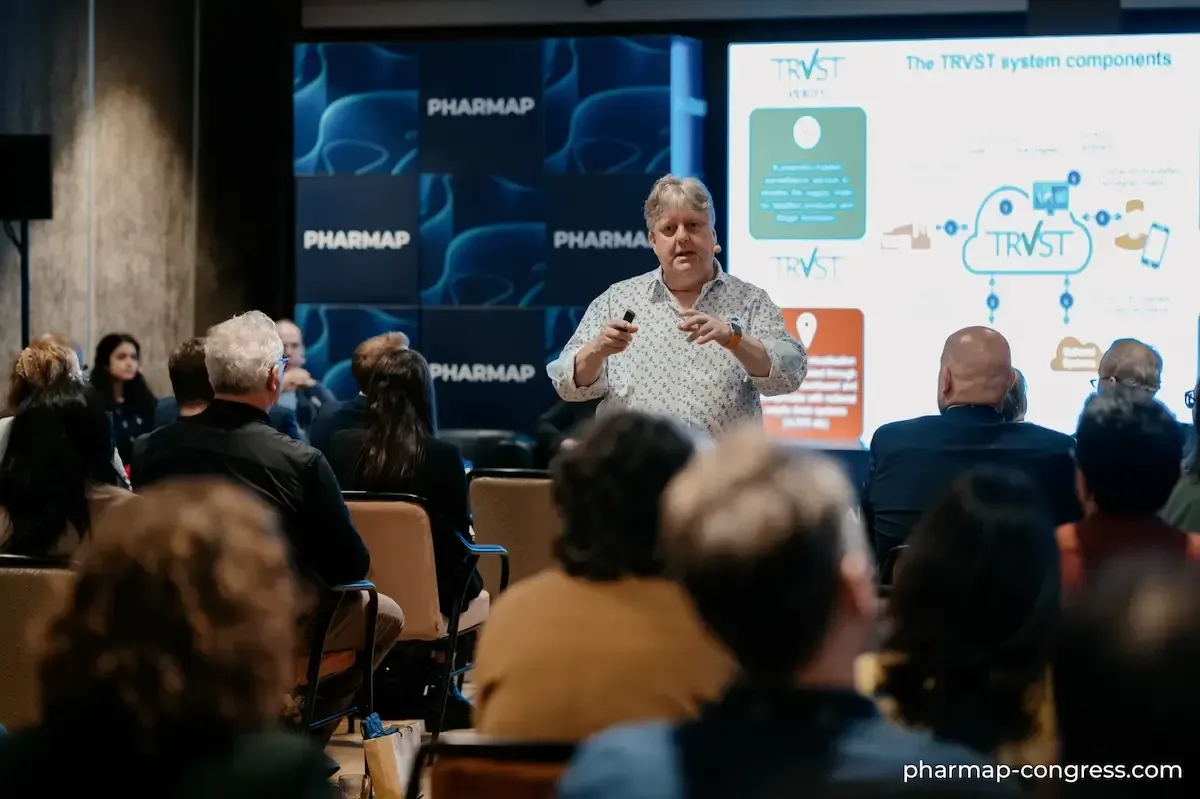
The Pharmaceutical Manufacturing and Packaging Congress (PHARMAP) offers a useful illustration of how the closed-door model plays out in a technically dense sector. PHARMAP runs as a capped, invitation-based event, bringing together roughly 300 delegates and 40+ exhibitors. At the 2026 edition, more than 220 pre-arranged one-to-one meetings took place over two days - an average of five to six scheduled conversations per supplier, each agreed before anyone left home. Rather than relying on open registration, the organisers match delegates in advance based on their roles and objectives.
In 2027, PHARMAP's business programme follows the same logic: session topics are shaped by the priorities participants flag beforehand - CAPEX-driven facility modernisation, supply chain resilience and Pharma 4.0 adoption. Discussions stay grounded in problems the room is actually working through. This edition takes place on 19-20 April in Berlin.
Speakers bring direct operational experience rather than a theoretical perspective. Contributors from Bayer AG, Roche, AstraZeneca, Novo Nordisk, Astellas Pharma and other companies share case studies on outsourcing partnerships, packaging sustainability, digital plant integration and site-level quality improvement, giving delegates practical insight they can apply in their own operations.
A single exhibition area at the centre of the venue means participants pass through it repeatedly across both days, and each one works with a personal manager who helps confirm relevant meetings beforehand and provides support throughout.
This does not mean open exhibitions have no place in a pharmaceutical company's event strategy. They remain valuable for market visibility and competitive benchmarking, and few companies would drop them entirely. The question is less about abandoning exhibitions than about matching format to objective: open events build awareness across a market, while closed-door ones are built to produce a specific, countable outcome. Forrester’s 2025 data reflects the shift directly: 53% of organisations report moving budget toward owned and closed-format events, compared with 47% still prioritising participation in third-party exhibitions. For many pharmaceutical manufacturers, that countable outcome is where the return on event spend is actually generated.
Those interested in how the model works in practice can explore PHARMAP's 2027 programme here.
Related News
-
Events
Global pharma manufacturing community meets in Berlin for PHARMAP 2027
-
Events
The future of pharma manufacturing was discussed in Amsterdam. Here's what matters
-
Business
PHARMAP 2026: From vendors to strategic partners
-
Events
Emerging trends in personalised medicine at PHARMAP 2026
-
Events
Your 2026 packaging event calendar: key industry dates to know
Latest Packaging News

Alupro publishes independent econometric review of the UK PRN market
Alupro has released an in-depth econometric analysis of the Packaging Recovery Note (PRN) market,...
BERO reintroduces limited-edition Spider-Man beer cans
Non-alcoholic beer brand BERO has announced the return of its limited-edition Spider-Man-themed...
Conference programme to tackle sustainability, regulation and innovation at UKPackaging Expo
UKPackaging Expo will put insight, regulation and real-world best practice centre stage this...
PCR and PPWR: Be ready for the 2027 gardening season with PEKU Folien!
As one gardening season comes to an end, preparations for the next are already underway. Whether...