interpack 2026 showcases processing & packaging for the pharmaceutical industry

Events
New therapies, increasing regulatory requirements and economic pressure are palpably changing the pharmaceutical industry. Production processes are becoming more complex, more interlinked and more demanding. To meet these requirements, interpack 2026 will consolidate the range in three halls.
interpack can do two things: it maps the entire processing and packaging value chain – and at the same time creates specific areas for individual user industries. The result for the pharmaceutical industry is a consolidated environment, in which solutions, materials and processes can be seen in direct connection.
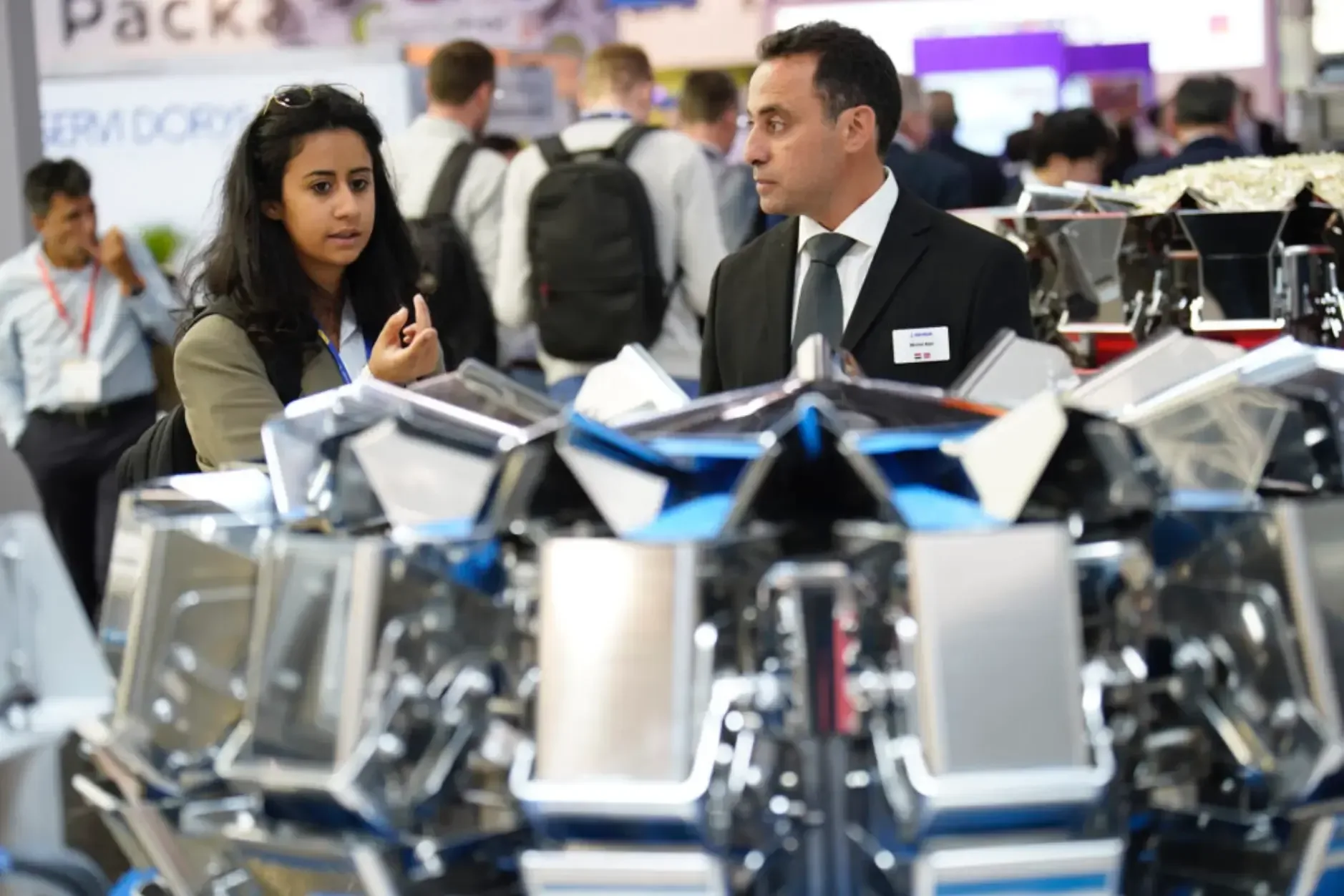
In Halls 15 to 17, companies such as IMA, Fette Compacting, Bausch & Ströbel, Uhlmann Pac-Systeme, Groninger, MULTIVAC Health Packaging, Körber Pharma, Romaco, OPTIMA, Harro Höfliger Verpackungsmaschinen, CAM and the Marchesini Group will be exhibiting their approaches to production and packaging in the pharmaceutical sector on around 40,000 square metres. Pooling space with the cosmetics industry is an obvious choice: both sectors place high demands on precision, hygiene and process reliability and, in many areas, utilise comparable technologies.
New therapies, new requirements, great opportunities
The outlook for the pharmaceutical industry remains positive. Pharmaceutical products worth around 1.9 trillion euros were manufactured worldwide in 2024 (VDMA/Euromonitor). Experts are anticipating 24 per cent growth by 2029. The main growth drivers are populous and economically ascendant markets such as China, India and Brazil, along with regions in South East Asia, North Africa and the Middle East.
Overall, the requirements for production and packaging are changing significantly. New therapies and highly effective active ingredients require flexible and networked production systems. Alongside this, processing and packaging requirements are on the increase. Added concerns are rising costs, volatile supply chains and the need for more efficient processes. Companies that will be represented in the pharmaceutical sector at interpack 2026 illustrate just how great the challenges are.
Thomas Fricke, Commercial Director at IMA, describes the situation as follows: “The pharma industry is undergoing major pressure due to the rise of biologics, Cell & Gene therapies and highly potent compounds, all of which require more advanced, flexible and connected technologies. Regulatory expectations for quality, sterility and real-time traceability continue to intensify. Economically, manufacturers face rising production costs, supply chain volatility and the need for faster, more efficient processes.”
Joachim Dittrich, CEO of Fette Compacting, shares these estimations: “Rising regulatory requirements, high cost and price pressure, and expiring patents are forcing shorter time-to-market cycles. At the same time, highly active ingredients and individualised therapies are changing the demands on production and containment. Today, instead of optimising in isolation, companies need to interlink development, technology transfer and production based on data – it is the only way to make processes efficient, secure and scalable.”
This will give rise to new conflicts of interest: “Increasing demands for automation, data security and sustainability in particular are driving the pressure to transform. This pressure is heightened by regulatory requirements such as the PPWR. The outcome is a conflict of objectives between product protection, reduced packaging volume and cost-effectiveness,” says Michael Mrachacz, CSO & Managing Director of Uhlmann Pac-Systeme, describing the situation.
Automation and sustainability go hand-in-hand
The decisive question is no longer automation or sustainability. In practice, both topics are developing in parallel and are becoming increasingly integrated.
“This is the big challenge for Pharma, because they cannot focus on one of them and give the others a lower priority,” explains Thomas Fricke (IMA). “Pharmaceutical manufacturers are therefore strongly investing in automation, AI-enabled intelligence and end-to end-data connectivity to enhance process control, reliability and throughput. Parallel to that, sustainability is becoming an increasingly important, separate strategic priority.”
The Marchesini Group also focuses on this interaction: “In recent years, we have established a cross-functional team that focuses in particular on analysing new packaging materials and their machinability, in order to turn the PPWR regulation into an opportunity. We are driving the replacement of PVC with recyclable mono-material solutions – particularly for blisters and trays – using materials such as R-PET, PP and PVC-free aluminium,” says Valerio Soli, CEO of the Marchesini Group.
Efficiency and sustainability go hand-in-hand today and can only become a real success factor through integrated process expertise, says Joachim Dittrich (Fette), describing the situation. “The biggest investments are currently being made in automation, data-based process solutions and AI. Those who control their processes based on data are able to measurably optimise the use of materials and energy.”
“A holistic approach is crucial,” adds Michael Mrachacz (Uhlmann): “Sustainability must be compatible with machinability and efficiency – and we support our customers with our consulting services along the entire value chain.”
interpack 2026 showcases concrete solutions for the pharmaceutical industry
What is coming to fruition in the investment strategies will be brought to light at interpack 2026. Here, pharmaceutical companies will find solutions for automation, data integration and sustainability.
Marchesini, for example, will be exhibiting machines and lines for the pharmaceutical and cosmetics industries in Hall 15. The focus is on sustainability, innovation – such as AI, robotics and digital solutions – and aseptic technologies. “Marchesini Group will present several innovative solutions in the field of robotics at interpack, increasingly integrated with artificial intelligence. The pharmaceutical industry requires production lines that are more and more sophisticated, safe and connected, in order to ensure products of the highest quality and safety,” says CEO Valerio Soli of the trade fair appearance. Uhlmann will also be situated in Hall 15. “At interpack, we will be presenting, in digital form, the PTC 200 for parenterals in carton mono-packaging and the BEC 500 as an integrated blister and cartoning solution. The focus will be on material-efficient, recyclable solutions as well as software solutions and digital and analogue services for the optimal combination of sustainability, process reliability and cost-effectiveness,” says Michael Mrachacz (Uhlmann).
IMA will be showcasing advances in sterile processing on an area of over 4,500 square metres in Hall 17. These include “magnetic levitation technologies that enable fully gloveless filling lines for Cell Therapy products – a breakthrough in contamination control and process reliability – along with a new lab scale version offering greater flexibility for R&D teams,” says Thomas Fricke (IMA). Additional highlights include a new generation of tablet presses, sustainable blistering platforms, automated cartoning delivering 70 per cent faster changeovers, modular auto-injector assembly and end-of-line solutions. These innovations are complemented by AI-driven digital support tools that enhance monitoring and predictive maintenance.
In Hall 16, visitors will be able to meet Fette Compacting, among others: “At our stand, we will be showcasing continuous manufacturing with the FE CPS, the latest containment solutions, emulators and lab services. The added value lies in shorter development cycles, greater product safety, reduced material consumption and a flexible production infrastructure that adapts seamlessly to new products and regulatory requirements,” says Joachim Dittrich (Fette).
Further details on all participating companies and their solutions can be found in the exhibitor and product database: http://www.interpack.com/1410
This article was originally published by interpack.
Related News
-
Supplier News
Hugo Beck to launch new sleeve wrapper for sustainable transport packaging at interpack
-
Events
The world's largest event for the processing and packaging industry: interpack 2026 is in the starting blocks
-
Supplier News
Lantech packaging machines ideal for use in e-commerce and logistic environments
-
Events
Materials, packaging materials and packaging aids: The full variety for all applications at interpack 2026
-
Events
interpack 2026: key focus areas for exhibitors
Latest Packaging News

Conference programme to tackle sustainability, regulation and innovation at UKPackaging Expo
UKPackaging Expo will put insight, regulation and real-world best practice centre stage this...
PCR and PPWR: Be ready for the 2027 gardening season with PEKU Folien!
As one gardening season comes to an end, preparations for the next are already underway. Whether...
SUPER DRY: How El Niño could affect global shipping and moisture risk
El Niño can affect more than rainfall and temperature. It can also change the conditions cargo...
Waitrose refreshes Good Health logo with new packaging labelling standards
Waitrose has announced changes to its Good Health logo, introducing additional ingredient...