How resilient is the packaging industry in an increasingly connected world?

Technology
From cyber attacks on supermarket refrigeration systems to disruption across transport networks and concerns over energy infrastructure, recent events have highlighted the growing dependence of global supply chains on digital technology.
For the packaging industry, where automation, artificial intelligence (AI) and connected machinery are becoming increasingly integrated into everyday operations, these developments raise important questions about cybersecurity, operational resilience and business continuity.
In October and November 2026, cyber attacks targeting commercial refrigeration systems across Europe resulted in substantial quantities of food being discarded after storage temperatures were remotely altered. Subsequent incidents affecting UK food suppliers were also reported, although the National Cyber Security Centre (NCSC) indicated that the national impact was minimal at the time.
While the incidents primarily affected refrigeration infrastructure, they demonstrate how interference with industrial control systems can have physical, economic and environmental consequences.
When packaged food is discarded following a breakdown in the cold chain, the environmental impact extends beyond the product itself. The packaging materials, energy, water and resources used during manufacturing, processing and distribution may also go to waste.
Automation, AI and cybersecurity in packaging
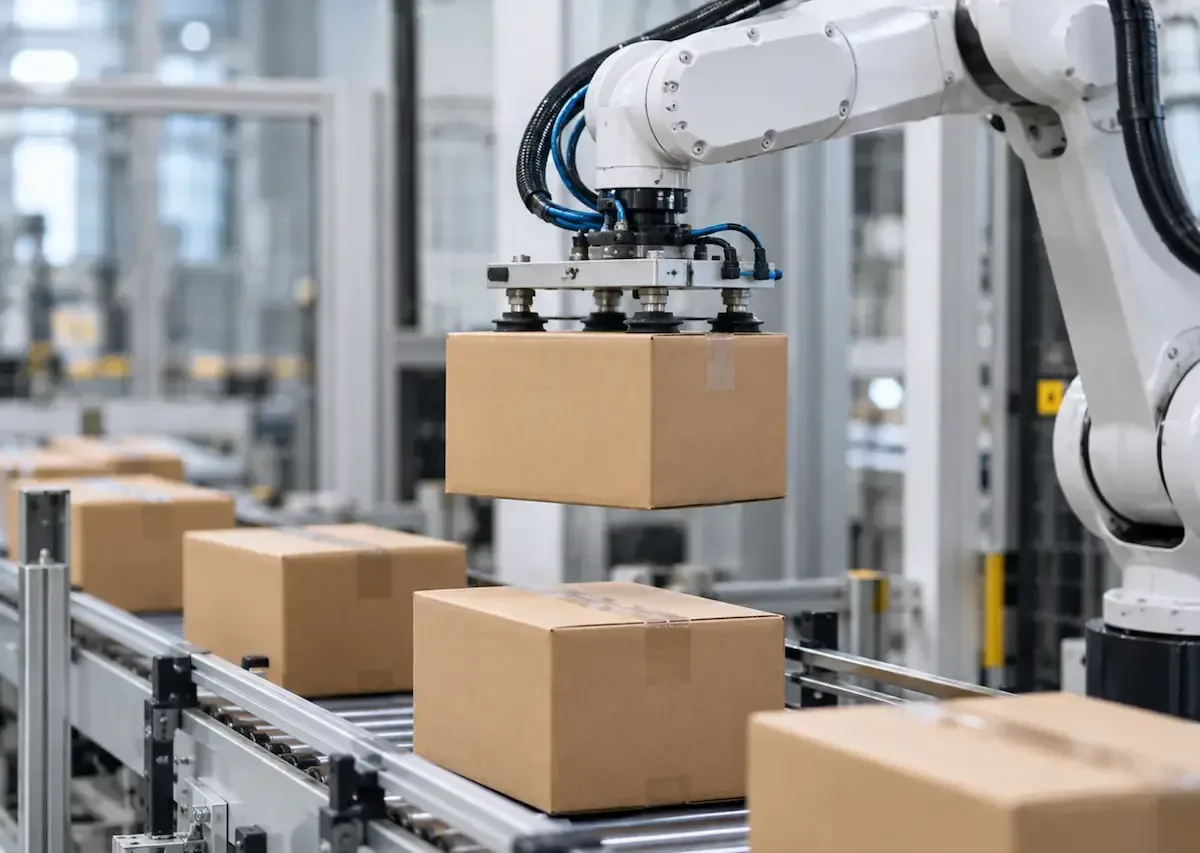
Similar considerations apply to packaging production. Modern packaging lines increasingly incorporate networked machinery, robotics, automated inspection systems, digital sensors and remotely accessible maintenance platforms. These technologies offer considerable benefits, including improved productivity, greater accuracy, reduced material consumption and more efficient equipment maintenance.
However, increased connectivity also introduces additional cybersecurity considerations.
A disruption to a packaging line could extend beyond temporary production downtime. Depending on the systems affected, an incident could compromise packaging integrity, labelling accuracy, product traceability or quality control. In sectors such as food, beverage and pharmaceuticals, where packaging plays a critical role in product safety and regulatory compliance, the consequences could be particularly significant.
The growing adoption of AI adds another dimension to the discussion. While AI can support predictive maintenance, defect detection, production planning and resource optimisation, it can also enhance the capabilities of those carrying out cyber attacks.
Both applications of the technology are developing simultaneously. AI can assist organisations in identifying unusual network activity and detecting potential threats, while also enabling malicious actors to automate certain activities and develop more sophisticated attacks.
However, not all cyber incidents involve AI. The NCSC's 2026 Annual Review, published on 3 November, highlights how many successful attacks continue to exploit familiar weaknesses, including inadequately secured systems and known software vulnerabilities.
Vulnerabilities beyond the factory floor
The risks also extend beyond the factory floor. Packaging manufacturers and suppliers operate within interconnected supply chains that depend on reliable energy supplies, transport networks, warehousing facilities and digital logistics platforms.
Disruption to any of these services, whether caused by a cyber attack, technical failure or power outage, could affect the availability of raw materials, delay packaging production or interrupt the distribution of finished goods.
For businesses operating just-in-time manufacturing models, where inventory levels are deliberately kept low, even relatively short periods of disruption could present operational challenges.
Designing packaging for unexpected disruption
These vulnerabilities also raise questions about the performance of packaging itself. When transport networks are disrupted or distribution is delayed, products may spend considerably longer in transit or storage than originally anticipated.
For temperature-sensitive food and pharmaceutical products, the ability of packaging to maintain suitable conditions during unexpected delays can be particularly important. Insulated packaging, passive cooling systems and high-barrier materials may offer additional protection, although their effectiveness depends on product requirements, environmental conditions and the duration of the disruption. Packaging alone cannot compensate for an indefinite loss of temperature control.
This presents a wider consideration for packaging design and material selection. While reducing material consumption and optimising packaging for established distribution conditions remain important objectives, designing for potential disruption may also help minimise product losses, unnecessary waste and the associated environmental impact.
Building resilience into packaging operations
As packaging operations become more digitally integrated, resilience may become an increasingly important consideration when specifying new machinery and designing production facilities. Secure remote access, software maintenance, independent monitoring systems, backup power provision and tested recovery procedures are among the measures businesses may consider alongside conventional performance indicators such as throughput, energy efficiency and return on investment.
Machinery manufacturers and technology providers also have a role to play through equipment design, ongoing software support and collaboration with end users throughout the operational life of packaging equipment.
The challenge is not necessarily to reduce the industry's reliance on automation or digital technology, but to ensure that the systems supporting these advances are sufficiently secure, adaptable and recoverable.
As the packaging industry continues to pursue greater efficiency, sustainability and automation, its ability to maintain safe and reliable operations during periods of disruption may become just as important as its ability to innovate.
Related News
-
Business
Industry insights wanted: Is connected packaging ready for Sunrise 2027?
-
Technology
PMMI: AI gains ground in packaging industry
-
Business
Automate UK shifts focus from strategy to delivery with refreshed manifesto for automation
-
Business
Mondi research shows packaging drives customer loyalty in a digital world
-
Technology
UKPackaging Expo: Why AI will reshape the packaging industry faster than we think

Latest Packaging News

Autopack: What is blow moulding? A complete guide
Blow moulding is a manufacturing process used to produce hollow plastic products, particularly...
PHS: Reducing carbon footprint with packaging automation methods
Packaging waste is not the only emissions lever on a packing line. Reducing carbon footprint with...
EU ban on plastic waste exports to non-OECD countries comes into effect
The European Union has introduced a ban on plastic waste exports to countries outside the...
How resilient is the packaging industry in an increasingly connected world?
From cyber attacks on supermarket refrigeration systems to disruption across transport networks and...