Melbourne welcomes Victoria’s largest PET plastic recycling plant
Sustainability
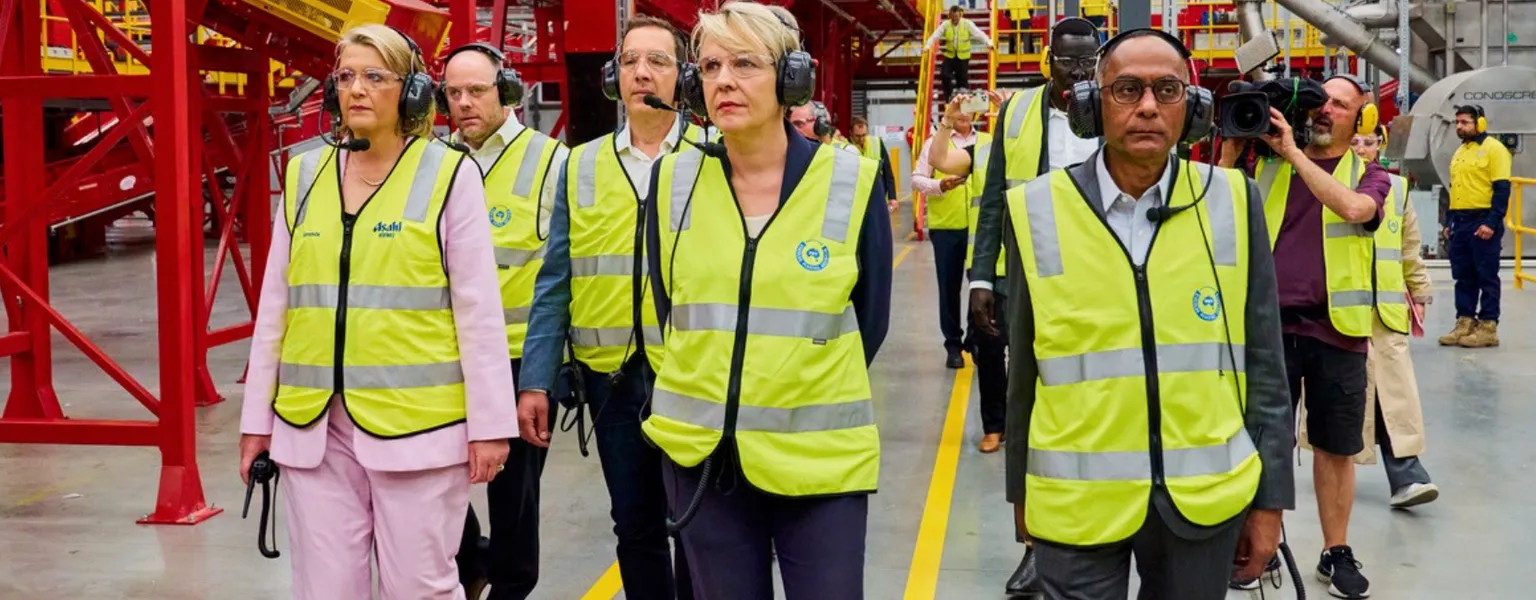
A cutting-edge PET plastic recycling facility has commenced operations in Melbourne, coinciding with the launch of Victoria's Container Deposit Scheme. With a $50 million investment, the facility has the capacity to recycle up to one billion 600ml PET plastic beverage bottles annually.
The world-class facility, the largest of its kind in Victoria, utilises state-of-the-art equipment capable of producing 2.5 tonnes of recycled PET resin per hour. Employing multiple infrared and optical sorters, it efficiently separates non-PET materials, such as bottle lids and labels, before shredding, grinding, and washing the PET bottles. The resulting material undergoes a two-stage heating and drying process, followed by an extrusion and purification process, producing recycled PET resin certified to US FDA standards.
The plant, a joint venture between Pact Group, Cleanaway Waste Management, Asahi Beverages, and Coca-Cola Europacific Partners (CCEP), plays a pivotal role in recycling PET bottles from the Container Deposit Scheme and household and office recycling bins. When fully operational, it is expected to produce around 20,000 tonnes of recycled PET resin annually, equivalent to the weight of two Eiffel Towers.
The Circular Plastics Australia initiative is committed to creating a bottle-to-bottle solution, fostering the local plastic circular economy. This marks the second operational facility in Australia, with the first in Albury NSW commencing operations in March 2022. The facility is set to employ approximately 45 people for its 24/7 operations and supported around 60 full-time jobs during its construction.
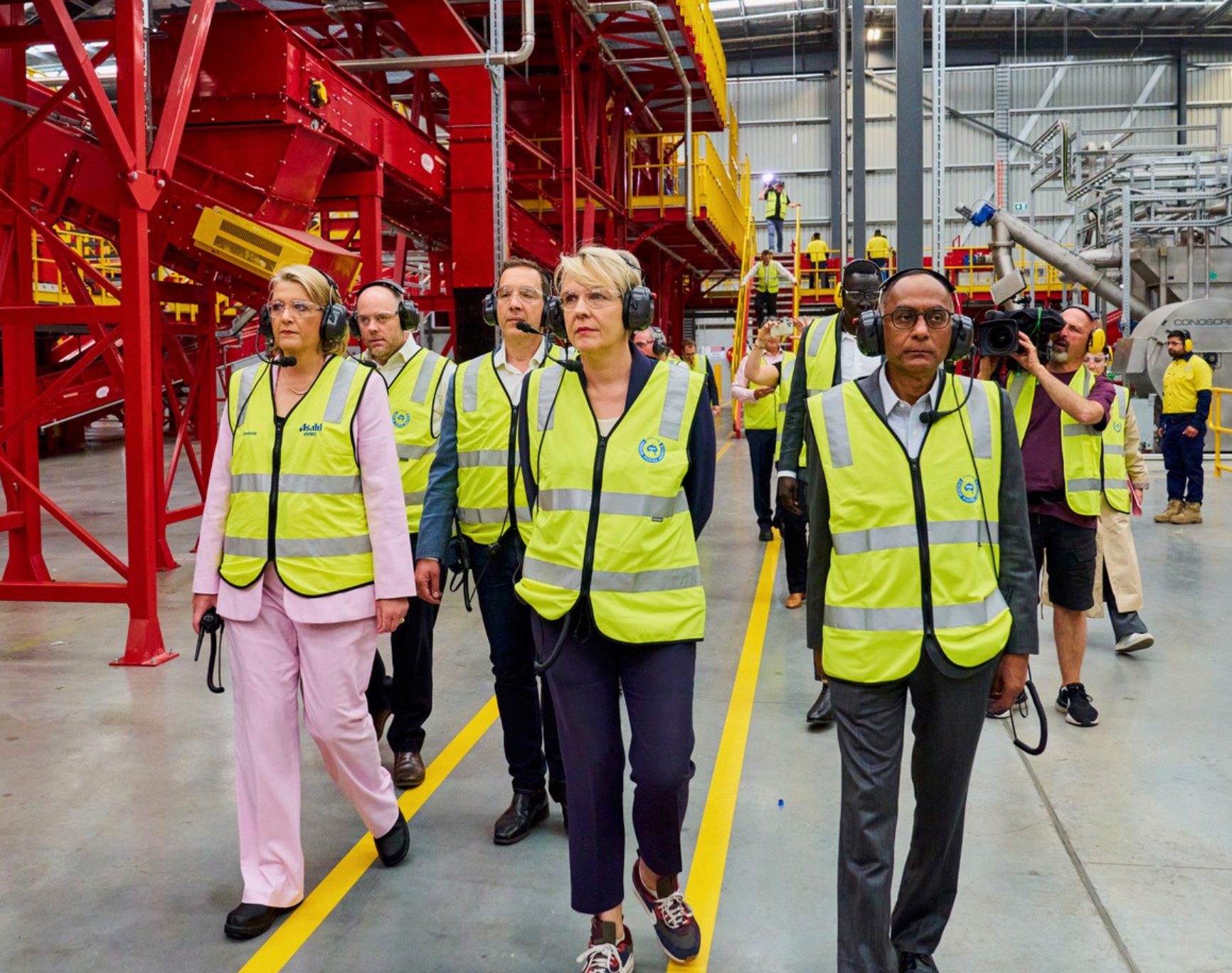
Managed by Pact Group, the recycling facilities receive used PET plastic from Cleanaway's collection and sorting network. Asahi Beverages and CCEP utilise the recycled resin to manufacture new 100% recycled PET beverage bottles, while Pact manufactures recycled food and beverage packaging. This collaborative effort aims to significantly increase the volume of PET plastics recycled in Australia, fostering a "closed loop" solution and reducing the country's reliance on virgin and imported recycled resin.
Pact Managing Director and CEO, Sanjay Dayal, said: Pact is proud to be part of a sustainable solution where we are making, recycling and remaking plastic beverage bottles in Australia. Together, the two Circular Plastics Australia (PET) recycling facilities are able to process up to two billion plastic bottles a year which helps keep thousands of tonnes of plastic waste out of landfill.
Related News
-
Sustainability
NAPCOR: slight dip in US and North American PET recycling rates
-
Sustainability
KitKat unveils wrappers with 90% recycled plastic in Australia
-
Sustainability
Coles introduces compostable fruit & veg bags in South Australia
-
Business
State-of-the-art PET recycling facility to boost circular economy in South Africa
-
Sustainability
New study shows PET plastic as the clear choice for sustainable beverage packaging
Advertisement

Latest Packaging News

OMAG: Packaging for nutraceuticals – greater flexibility, less waste
Designing the right format means improving productivity, sustainability and the final user...
Coca-Cola, Nestlé and Danone agree to revise recycling claims on plastic bottle labels
Coca-Cola, Nestlé and Danone have agreed to amend recycling claims displayed on their plastic...
Students develop recyclable curry and rice packaging for Pho
Two students from Sheffield Hallam University have won Deliveroo's 2026 Sustainable Packaging...
Hormel introduces portioned bacon packaging to reduce food waste
Hormel has introduced a new packaging format for its BLACK LABEL Original Bacon range, designed to...