Compostable packaging from Swedish cycling event used in tree planting project

Sustainability
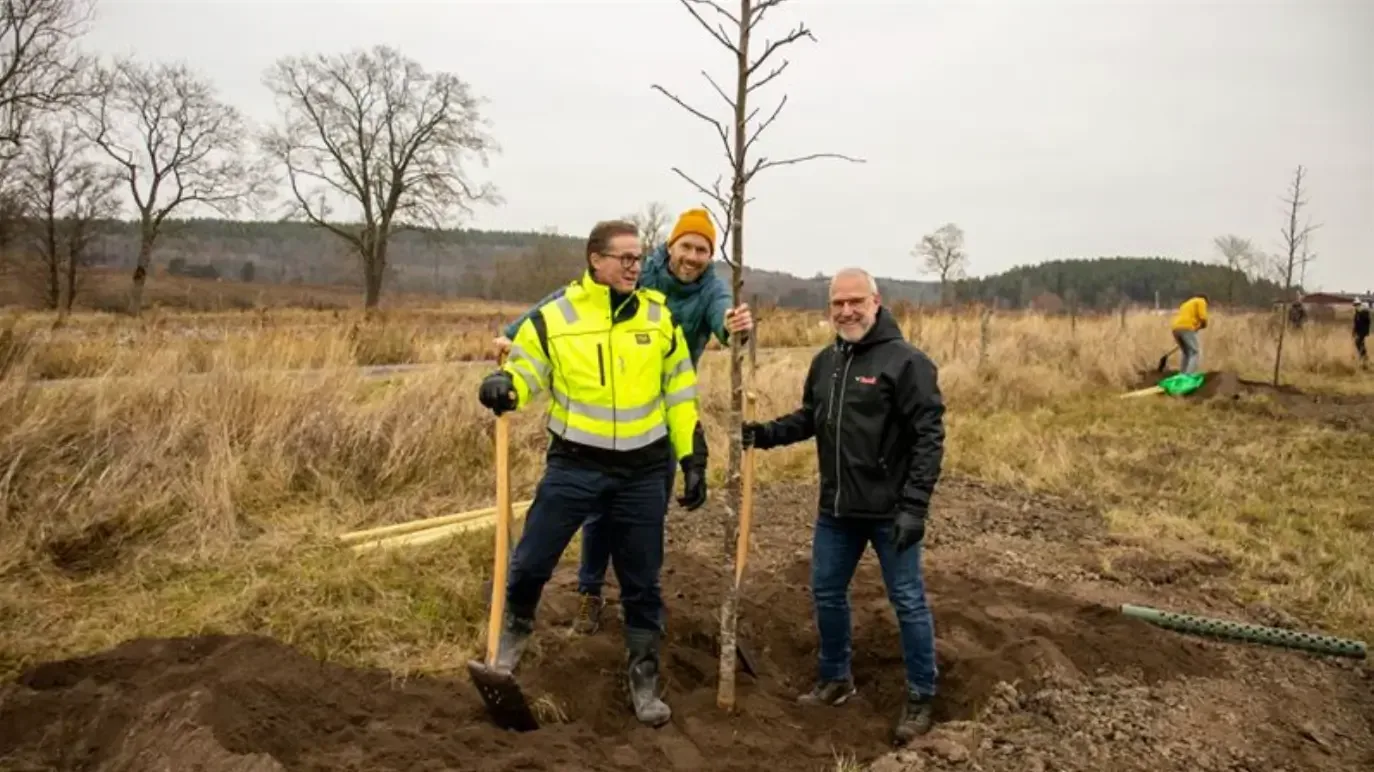
Compost produced from food waste and compostable packaging collected during Sweden's Vätternrundan 2026 cycling event has been used to support tree planting along the Göta Canal.
The initiative involved Duni Group, Vätternrundan, waste management company Renall and the Göta Canal, bringing together waste collection, local composting and the reuse of organic material.
During the event, approximately 12,000 meals were served at the Jönköping rest stop, where food waste and compostable packaging were collected for processing using a composting solution supplied by Duni Group.
Around 1,100 litres of waste material, equivalent to approximately 550 kilograms, was collected. The process recovered approximately 200 litres of compost material, which was subsequently used for tree planting along the canal.
The planting took place on 9 November in Loddby, near Söderköping, as part of ongoing work to maintain and restore the Göta Canal's natural and historic surroundings.
For us, sustainability means looking beyond the event itself. The fact that material collected during Vätternrundan is now being used for tree planting along the Göta Canal is a concrete example of how resources can continue to create value even after participants have crossed the finish line. These are exactly the kinds of long-term sustainability solutions we want to continue developing together with our partners.
Oskar Sundblad, CEO of Vätternrundan.
The canal's tree-lined avenue, described as the longest in Northern Europe, dates back approximately 200 years. Regular replacement planting is required as existing trees age, become diseased or die. In addition to their historical significance, the trees help stabilise the canal banks through their root systems.
The project illustrates how compostable foodservice packaging and organic waste from large-scale events can be collected and processed locally, with the resulting material used in environmental maintenance projects.
According to the organisations involved, the experience also highlighted the importance of clear waste separation procedures, effective signage and practical collection systems when implementing composting initiatives at large events.
The collaboration provides an example of how event waste management, compostable packaging and local composting infrastructure can be connected to support resource recovery and reuse.
Related News
-
Events
Plastic-free cups and compostable packaging at major cycling event in Sweden
-
Supplier News
IMPEPACK strengthens premium tea packaging with TIPA compostable solutions
-
Supplier News
Viscose achieves OK compost HOME certification for plastic-free shrink sleeves
-
Supplier News
TIPA: Compostable vs. biodegradable tea packaging – what’s the difference?
-
Supplier News
Pawniolo Pets and TIPA: Packaging that gives back to the land

Latest Packaging News

Compostable packaging from Swedish cycling event used in tree planting project
Compost produced from food waste and compostable packaging collected during Sweden's Vätternrundan...
Rémy Martin introduces festive packaging for 2026 limited-edition cognac collection
Rémy Martin has introduced a limited-edition holiday collection for 2026, featuring specially...
NEW Horizontal Flowrappers available in the UK from Soken Engineering
Following a recent partnership with Sigitaspak, Soken Engineering are proud to offer a range of...
Palcut: PPWR and pallet packaging – how to reduce packaging without compromising pallet stability
PPWR is changing the way manufacturers need to think about packaging. The new EU Packaging and...