Food brands join digital watermark trial for flexible packaging recycling

Technology
Mondelēz International, PepsiCo and pladis are participating in a Belgium-wide trial exploring whether digital watermark technology could improve the sorting of flexible food packaging for recycling.
The project is testing the technology on wrappers, films and other plastic food packaging collected through Belgium’s household recycling system. Digital watermarks could enable sorting equipment to identify characteristics including material type and whether packaging has been used for food, allowing different packaging types to be separated more accurately.
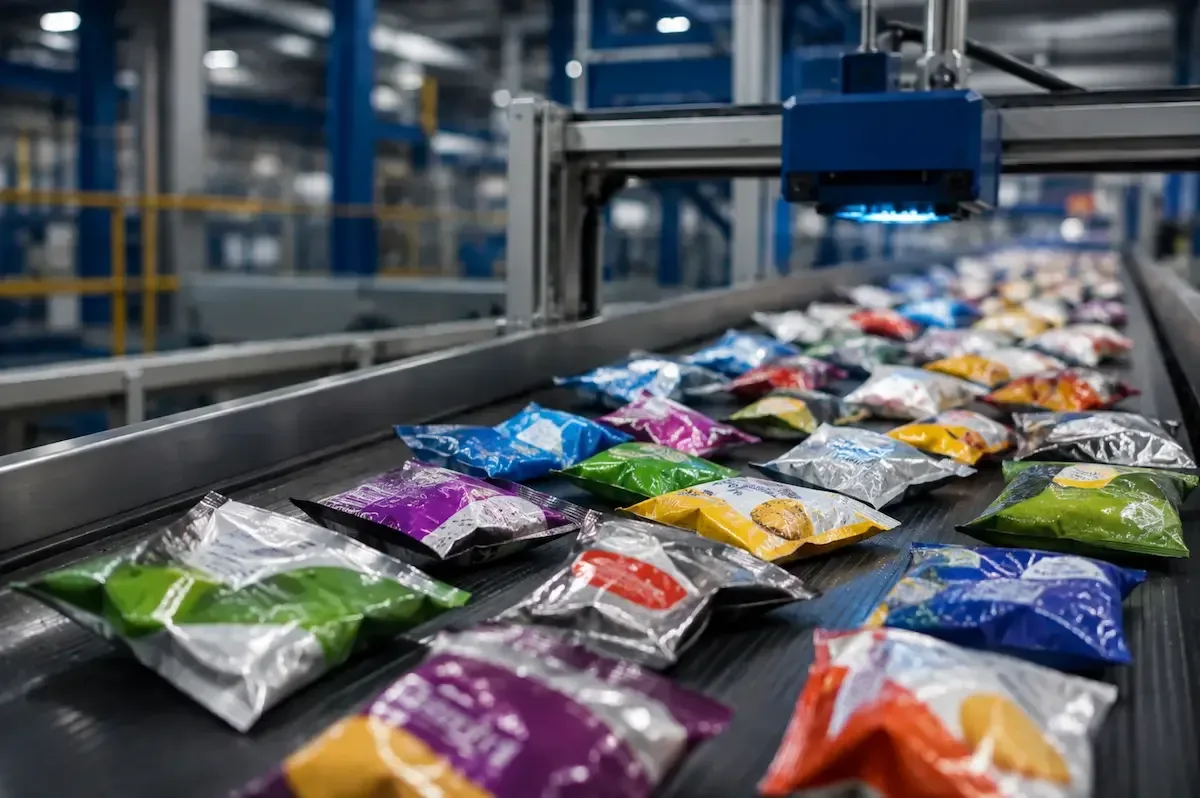
The watermarks, supplied by Digimarc, consist of codes incorporated across the surface of packaging during printing. Although imperceptible to consumers, they can be detected by specialist sorting equipment.
The trial forms part of the HolyGrail 2030 – Circular Packaging Consortium, facilitated by AIM – European Brands Association. The initiative brings together around 79 companies and organisations to explore intelligent sorting and recycling technologies.
Belgian recycling organisation Fost Plus is leading the sorting trials. Bales of flexible film collected in Belgium are being transported to Hündgen Entsorgungs’ sorting facility in Germany, where high-resolution cameras supplied by Pellenc ST are used to detect the watermarks.
According to the project partners, it is the first national-scale European trial involving flexible post-consumer packaging collected through Belgium’s household recycling system.
Food-contact recycled content is where the industry has some of the biggest challenges and the least time. This trial moves testing from evidence-gathering into commercial reality, which is exactly what bridging the gap between ambition and the 2030 targets requires.
Liz Morrish, CEFLEX Leadership Team – Operations Director.
Flexible food packaging can present challenges when being recycled into higher-quality applications, particularly food-grade packaging, which is subject to specific quality and safety requirements. More accurate identification and sorting could therefore support the development of suitable recycling streams alongside appropriate recycling and decontamination processes.
The trial also comes ahead of recycled content requirements under the EU Packaging and Packaging Waste Regulation (PPWR). From 2030, certain categories of plastic packaging will be subject to minimum recycled content requirements, including a 10% requirement for some contact-sensitive plastic packaging applications.
Related News
-
Supplier News
Tadbik expands U.S. flexible packaging manufacturing in New Jersey
-
Supplier News
NPP: A guide to flexible packaging pouches
-
Supplier News
TIPA® Compostable Packaging launches breakthrough high-barrier solutions for flexible packaging
-
Sustainability
Flexible Plastic Fund launches FlexCircular to support UK flexible packaging recycling
-
Sustainability
Flexible packaging made from recycled plastic developed for Marabou chocolate bars
Latest Packaging News

Jenton win the Automate UK Award for Innovative Processing System
Jenton International, an innovative packaging, automation and UV specialist for over 53 years have...
UK retail collection points now accept plant-based beauty packaging
MYGroup has partnered with UK materials company Shellworks to provide a new recycling option for...
Collectible coffee cans feature characters from Marvel's Avengers: Doomsday
Coffee brand happy has partnered with Marvel Studios to introduce a limited-edition range of...
NIVEA Creme tin now contains 95% recycled aluminium
Novelis and Beiersdorf have announced that the NIVEA Creme tin is now manufactured using 95%...