Sainsbury's switches to cardboard trays for own-brand chicken and fish
Sustainability
Sainsbury’s is implementing several packaging changes across its own-brand chicken and fish lines, which will save 694 tonnes of plastic annually.
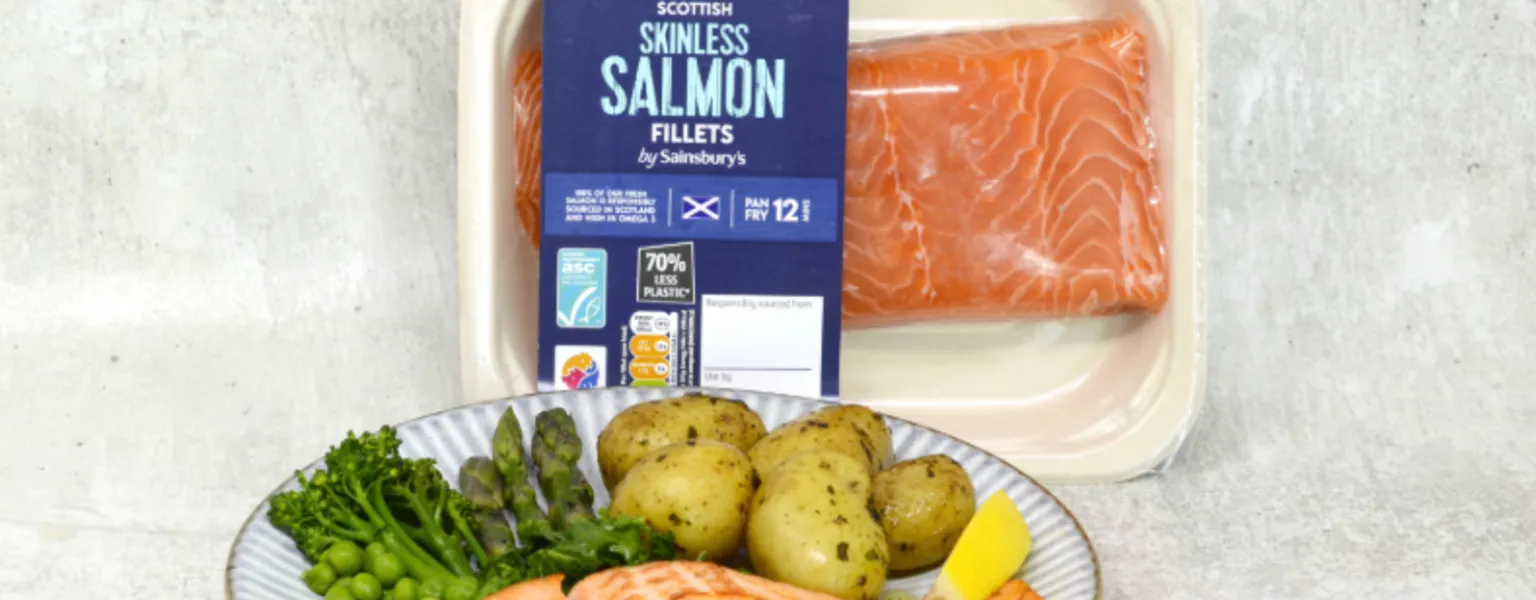
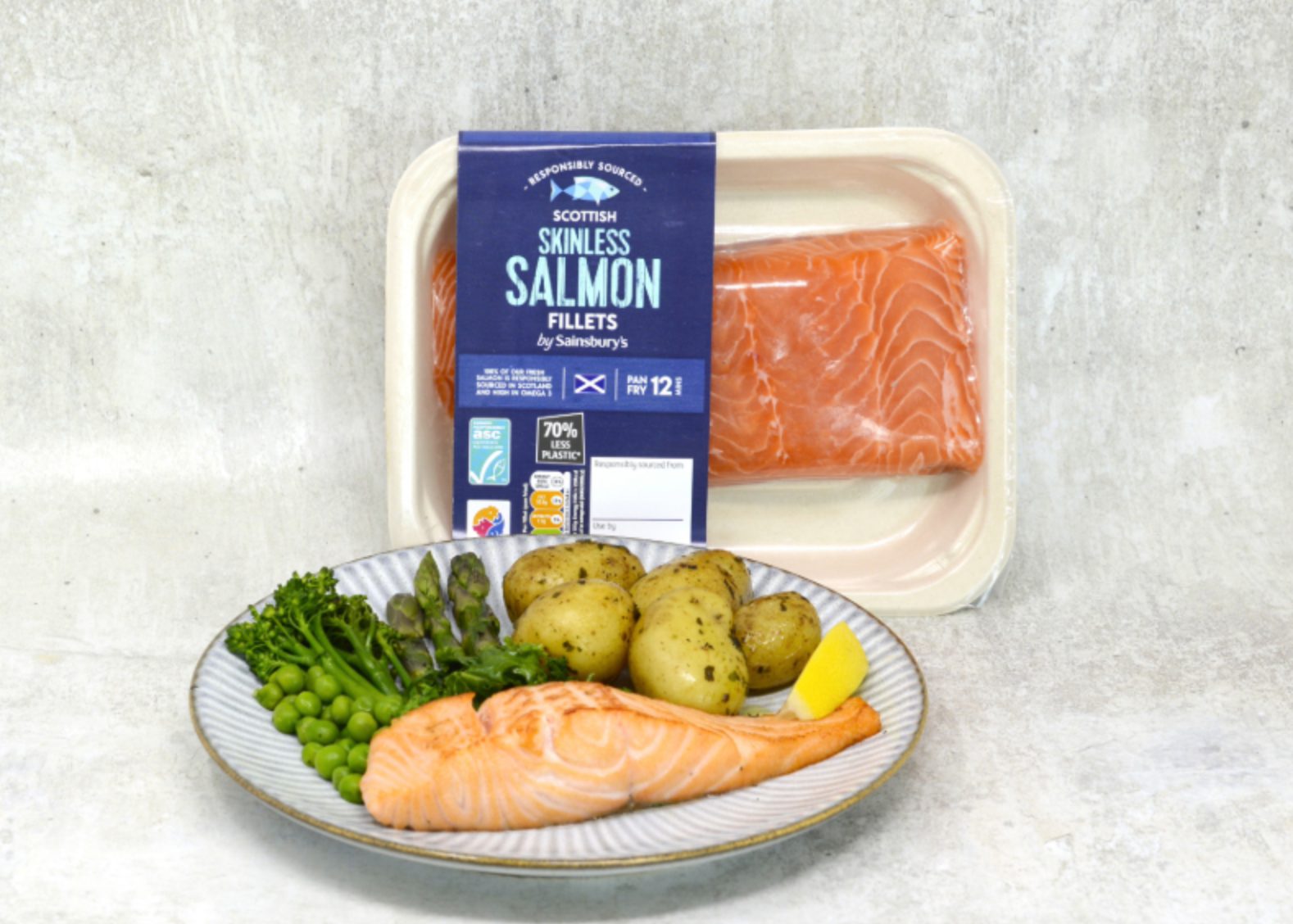
All own-brand salmon fillet trays will now use pulp cardboard instead of plastic, a first for a UK retailer. This change will reduce plastic use by 70%, saving 346 tonnes of plastic per year.
Additionally, Sainsbury’s is introducing cardboard trays for its Taste the Difference and by Sainsbury's breaded chicken lines, expected to save 300 tonnes of plastic annually. Similar changes are being made to the Taste the Difference breaded fish fillets, which will save 48 tonnes of plastic each year.
The new packaging will be rolled out over the summer across many seasonal chicken products, including finger food and BBQ ranges. This more sustainable packaging will be used for breaded goujons, nuggets, schnitzels, and more.
Claire Hughes, Director of Product and Innovation at Sainsbury’s, said: With salmon being one of our most popular fish, we made it a priority to reduce the plastic on the packaging of this much loved product as we work towards our Plan for Better goals. We are now the first retailer to make the move to have recycled pulp card trays across all our bySainsbury’s and Taste the Difference salmon products, enabling a whopping 70% plastic reduction. Together with changes to our breaded fish and chicken packaging, we are set to save 694 tonnes of plastic a year – a significant step towards our plastic reduction goals.
The pulp cardboard trays for salmon and the cardboard trays for breaded chicken and fish are easily recyclable, allowing customers to reduce household waste by recycling the packaging in kerbside bins.
Related News
-
Sustainability
Sainsbury’s switches to cardboard punnets for mushrooms
-
Supplier News
YPS: Unique LIDTEC ultra-thin lidding film proves a Heck of a choice
-
Sustainability
Sainsbury’s introduces paper packaging for toilet and kitchen rolls
-
Sustainability
Sainsbury's ditches use-by dates on milk to slash waste
-
Sustainability
Sainsbury's Tu Clothing swaps plastic babywear hangers for cardboard
Advertisement

Latest Packaging News

YPS: Faster, lower cost packs for Amazon Liquids Seller of Rubio Monocoat
Rainbow Chalk Markers Ltd, the makers of Rubio Monocoat, a specialist wood oil product, have...
OMAG: Packaging for nutraceuticals – greater flexibility, less waste
Designing the right format means improving productivity, sustainability and the final user...
Coca-Cola, Nestlé and Danone agree to revise recycling claims on plastic bottle labels
Coca-Cola, Nestlé and Danone have agreed to amend recycling claims displayed on their plastic...
Students develop recyclable curry and rice packaging for Pho
Two students from Sheffield Hallam University have won Deliveroo's 2026 Sustainable Packaging...