Autopack: How to scale from manual filling to full automation

Supplier News
Your production demand is increasing, and your manual filling machines and procedures just aren’t keeping up with the newfound pace. The solution lies in filling line automation, but how do you scale efficiently in line with your budget?
At Autopack, we support UK businesses with a range of manual, semi-automated and fully automated filling machines, helping them scale up production demand. This guide will detail why it might be time to scale up to filling automation, what is required to switch and where you can get the ideal machinery for your products.
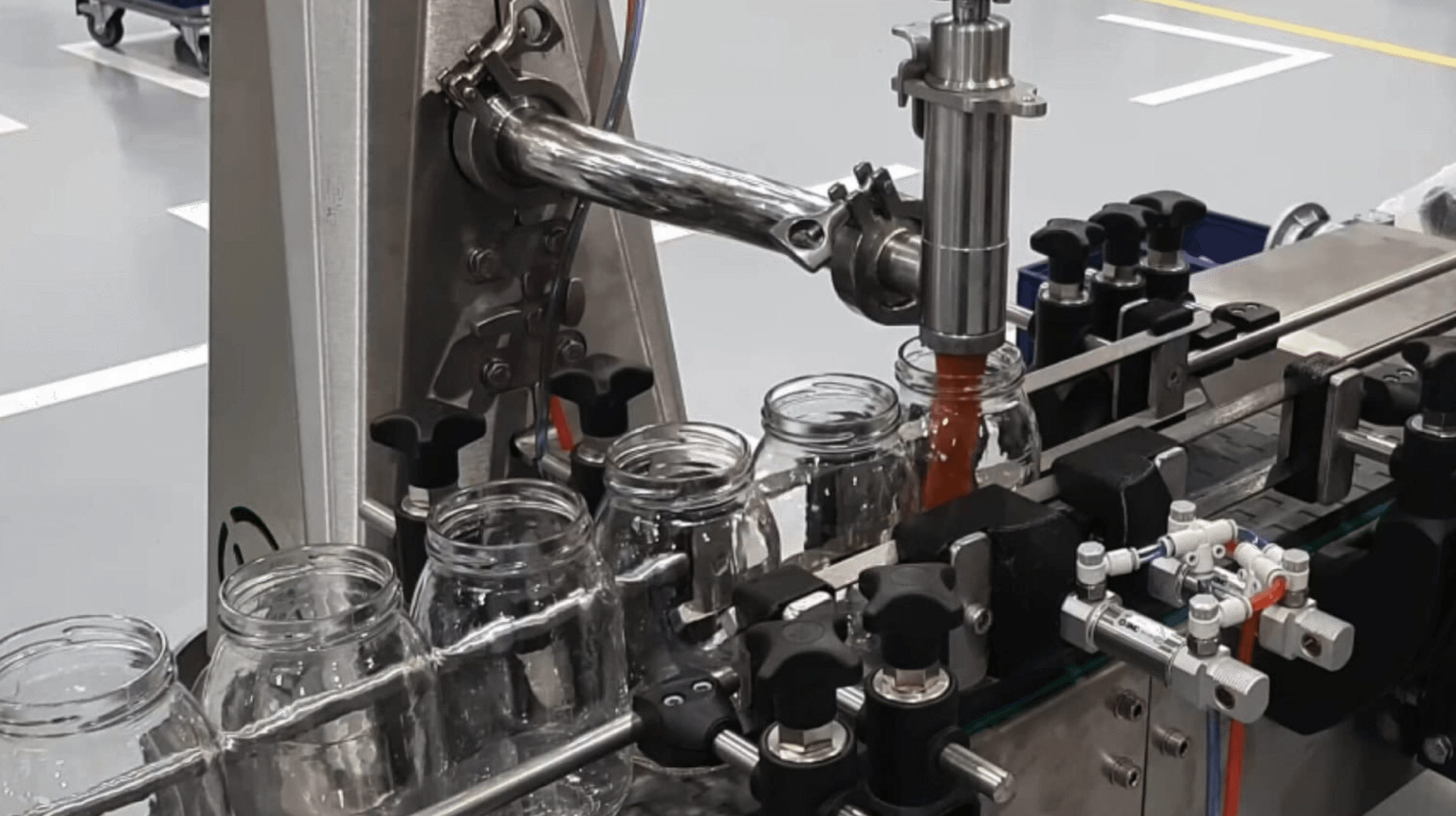
Signs it’s time to move beyond manual filling
As your business begins to grow and demand increases, you may begin to see pitfalls and issues in your manual filling line. This is normal, but it’s important that you start to implement measures sooner rather than later.
Common signs you need to upgrade to automated filling may include inconsistent fill levels, rising labour costs and production bottlenecks due to increased order volumes. Automated machines, or even semi-automated machines, can easily adapt and scale with your business.
The challenges of staying manual too long
Indeed, your production will face several challenges and issues when you don’t scale effectively.
Limited output capacity:
Manual filling can only get you so far. Even if your output is low volume, a semi-automated line will help increase output drastically. Relying on manual processes alone for too long will just hold your business and profits back.
Missed market opportunities:
Many manual systems can only accommodate one type of container size and fill volume, so not scaling up will limit you in developing new products and markets. Home care products like bleach and washing-up liquid come in all shapes and sizes of containers, for example. So, having a filling machine that can only fill one type of container won’t allow you to reach new markets.
Human error and waste:
If you’re filling products that require high levels of accuracy, like pharmaceuticals, manual machines don’t provide the same level of accuracy as automated alternatives. This will lead to costly errors and waste.
Worker fatigue and safety risks:
Workers constantly adjusting and filling will become fatigued, and more manual interference in processes could lead to strain or even injuries. This will increase costs on extra labour and lead to delays.
Understanding the automation spectrum
Filling line automation doesn’t have to mean fully automatic with minimal human input. It can be a mix of human and computer control with semi-automated filling. Starting out with semi-automated filling is a great starting point for scaling up production. But what are the differences between manual, semi-automated and fully automatic?
Manual filling
Manual filling relies heavily on operators to position containers, trigger filling, cap, label and pack products. Equipment is basic and often standalone. Manual machines will likely be simple pumps or gravity fillers with minimal sensors or controls and will rely heavily on workforce skill and consistency.
Cost vs Output:
· Capital cost – very low
· Labour cost – high (per unit)
· Output – low to moderate
· Consistency – variable
Manual filling makes sense for startups or new product launches that are low volume or have short production runs. It is also beneficial for frequent changeovers or testing new products.
Semi-automatic filling
Semi-automatic systems automate the critical, repeatable processes while keeping operators involved in loading, unloading or secondary tasks. Typically, these systems will automate filling but require manual container placement. They’ll also likely feature timed or volumetric filling for improved accuracy and have basic PLC (Programmable Logic Controllers).
Cost vs Output:
· Capital cost – moderate
· Labour cost – medium
· Output – medium to high
· Consistency – good
Semi-automatic filling improves fill accuracy and repeatability, as it can accommodate faster throughput without full line redesign. It also allows for easier operator training and features better quality control, helping to reduce waste.
Fully automatic filling lines
Perfect for high-volume production, fully automated lines handle the entire filling process with minimal operator involvement, from container infeed to final discharge. With automated systems, they will often be integrated with conveyors, sensors, capping capabilities and labelling. Operators will use a centralised PLC with minimal input, as the machine will automate all critical and most secondary processes.
Cost vs Output:
· Capital cost – high
· Labour cost – low
· Output – very high
· Consistency – excellent
Automatic filling machines are the ideal option for productions needing a high-volume, continuous production line. Businesses facing labour shortages or rising labour costs can benefit from investing in these systems, not only to meet increased demand but also to benefit from highly consistent results and predictable output.
How to scale up to automated machinery
What is scaling production like, and how do you assess which systems you need?
Step 1: Evaluate your current production needs
Before investing in automated machinery, you must clearly understand what your production line’s needs are currently and what it will look like in the future.
Start by defining realistic production targets like your current throughput and future volume requirements. This will help determine whether manual processes are limiting your growth and market reach.
Different products also behave differently during filling. Low viscosity liquids, creams, pastes or products with particulates all require specific filling technologies. Matching the filter type to product characteristics ensures accuracy, consistency and reduced waste.
You should also assess the range of container sizes, shapes and materials used. High variation may require flexible machinery or modular upgrades, while standardised containers allow for faster automation and simpler changeovers.
Step 2: Start with semi-automation
More often than not, it’s best to go from manual to semi-automation rather than jumping straight to fully automatic. Transitioning to semi-automatic filling will help deliver a fast return on investment by reducing product giveaway, improving consistency and increasing output without the high capital costs of full automation.
Piston and pump fillers provide consistent, repeatable fills and are suitable for a wide range of products. With semi-automation, operators may still load containers or manage capping manually while the filling process is automated. This hybrid approach reduces labour strain while maintaining flexibility.
Step 3: Integrate supporting equipment
Once filling is semi-automated, integrating complementary equipment helps unlock further efficiency gains. Conveyors reduce manual handling, improve line flow and prepare the production line for full automation. Automated labelling, capping and other end-of-line equipment ensure consistent application, reduce errors and increase line speed. These machines can be added modularly without replacing existing fillers.
Step 4: Transition to a fully automated filling line
The final step is scaling to fully automated filling to meet demand for stable products and high-volume production. For filling different liquids, automatic rotary fillers are great for handling container feeding, filling and discharge at high speeds with minimal operator involvement, supporting continuous production.
The automated machines will also have centralised Programmable Logic Controllers (PLC) for improved reliability, quick recipe selection and diagnostics. Additionally, automated changeovers will reduce downtime when switching products or container sizes, and advanced systems can provide real-time production data, fault monitoring and performance analytics.
Budgeting & ROI considerations
Scaling up production comes with several cost considerations, so it’s vital to plan your budget in advance to scale effectively. While automated filling machinery requires upfront investment, labour savings over time often offset the initial cost, and the reduced risk of human error and unplanned stoppages helps keep delays at bay and keeps lines running longer. Many businesses opt for modular and upgradable equipment to ensure their future, long-term growth is supported without complete and costly system replacements.
Facility & infrastructure requirements
Scaling up to filling line automation requires the right facilities and infrastructure. Automated machinery requires a reliable electrical supply, compressed air and sufficient floor space. Planning your utility and space requirements early avoids costly retrofits later. Also, automation often changes how materials move through a facility, so assess your line layout to see if you can improve efficiency, reduce bottlenecks and support future expansion.
Automated lines must meet safety standards and industry regulations. Guards, sensors and emergency stops protect operators while ensuring compliance with hygiene and quality requirements.
Partnering with the right equipment supplier
What is scaling production and how is it achievable when it comes to filling production? It’s evaluating the types of products and containers, along with capacity and volume, and pairing your needs with the right type of filling machine. But where do you get the ideal machines from for your direct needs?
Autopack is your filling machine supplier. We can recommend and provide the ideal liquid filling machines, powder filling machines and more that span manual, semi-automatic and fully automatic. Our mission is to help businesses facilitate new growth and provide a range of services to see your growth come to fruition. From designing custom filling lines and machines to providing training, installation and maintenance, we offer everything you could need for cost-effective, efficient and accurate production. Reach our team to discuss your production line on 01432 677 000 or contact us via the contact form.
This article was originally published by Autopack.

Related News
-
Supplier News
Autopack: What is a sealing machine and how does it work?
-
Supplier News
Autopack Group launches new division Autoweigh at PPMA Show with smallest ever multihead weigher
-
Supplier News
PPMA Show sees a full packaging line-up and new division from Autopack
-
Supplier News
Autopack Group’s Technosys helps leading pork scratchings producer rebuild production after fire
-
Supplier News
Autopack and Weightpack link-up to provide advanced net weight filling systems to UK manufacturers
Latest Packaging News

Grated cheese goes pocket-sized with limited-edition clip-on packaging
Kraft Natural Cheese has introduced Pocket Parm™, a limited-edition miniature version of its grated...
Truly Grass Fed updates packaging in response to consumer preferences
Truly Grass Fed has introduced a refreshed packaging design across its dairy product range, with a...
Miron® introduces refreshed brand identity and website
A new digital experience brings protective glass packaging, expertise, and inspiration together...
Raft of new exhibitors completes the UKPackaging EXPO 2026 line-up
A surge of newly confirmed exhibitors has finalised the floor plan for the highly anticipated...