PPWR 2026: A practical roadmap for packaging compliance

Business
As the EU’s Packaging and Packaging Waste Regulation (PPWR) takes effect, businesses placing goods on the EU market are entering a more structured and demanding compliance environment.
For many non-EU companies, partnering with an authorised representative remains one of the most efficient ways to manage documentation, reporting, and cross-border obligations.
The two infographics below summarise what matters most right now: the immediate steps required for 2026 compliance, and the longer-term timeline shaping packaging strategy through to 2040.
What you need to do now
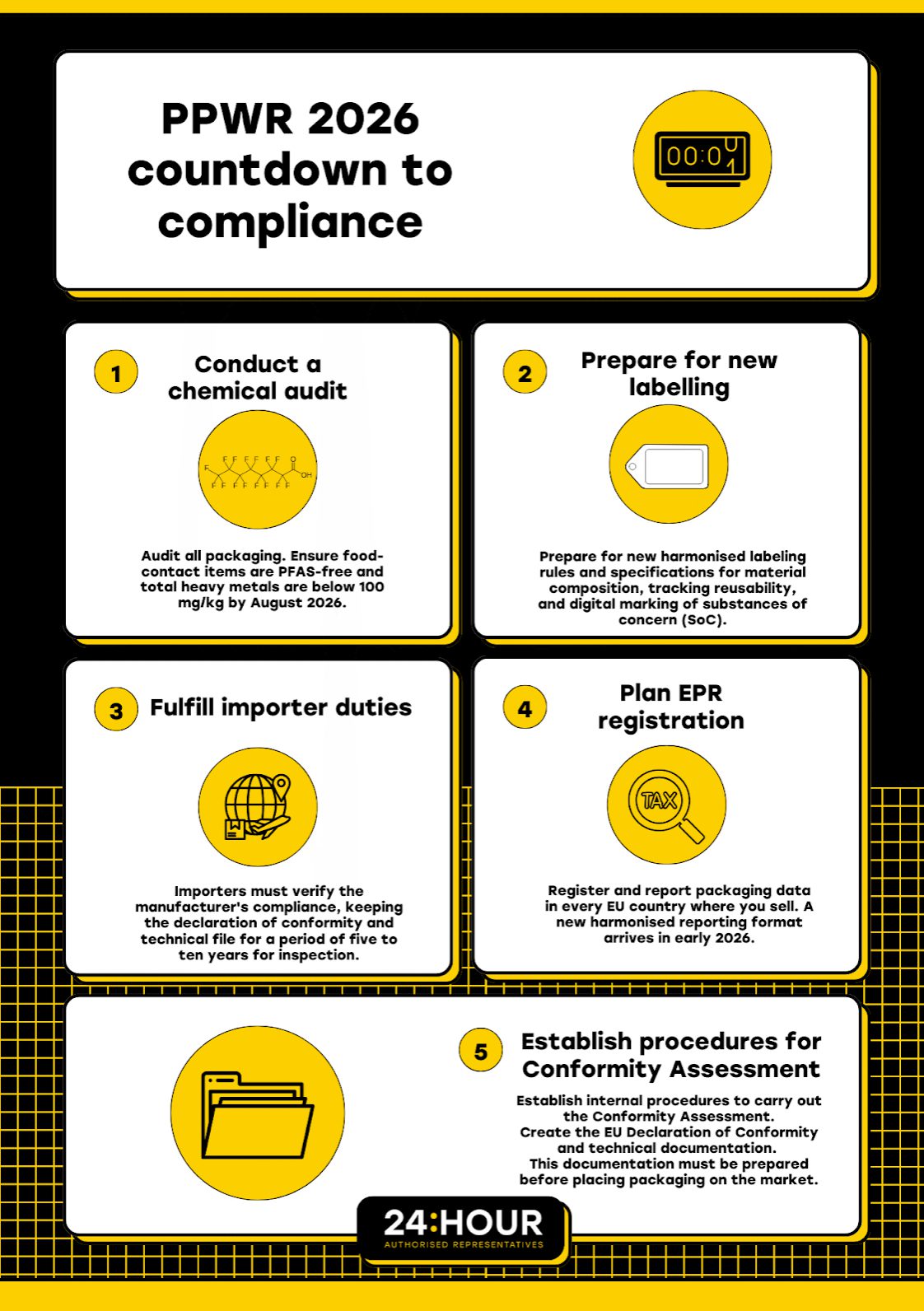
There are five priority actions businesses should already be implementing to align with PPWR requirements and reduce exposure to delays or penalties.
These include:
Conducting a chemical audit: Review all packaging materials to ensure food-contact items are PFAS-free and total heavy metals remain below 100 mg/kg by August 2026.
Preparing for new labelling requirements: Update packaging to meet harmonised EU standards, including material composition disclosure, reuse tracking systems, digital marking for substances of concern.
Fulfilling importer obligations: Importers must verify manufacturer compliance, retain the declaration of conformity, and maintain technical documentation for 5 to 10 years.
Planning EPR registration: Register and report packaging data in each EU country of sale using the new harmonised format introduced in 2026.
Establishing conformity assessment procedures: Build internal systems to evaluate compliance and prepare documentation before products reach the market.
Taking these steps early helps businesses avoid costly redesigns, shipment rejections, and last-minute compliance gaps, particularly as scrutiny around packaging waste intensifies across EU markets.
The bigger picture: PPWR timeline to 2040
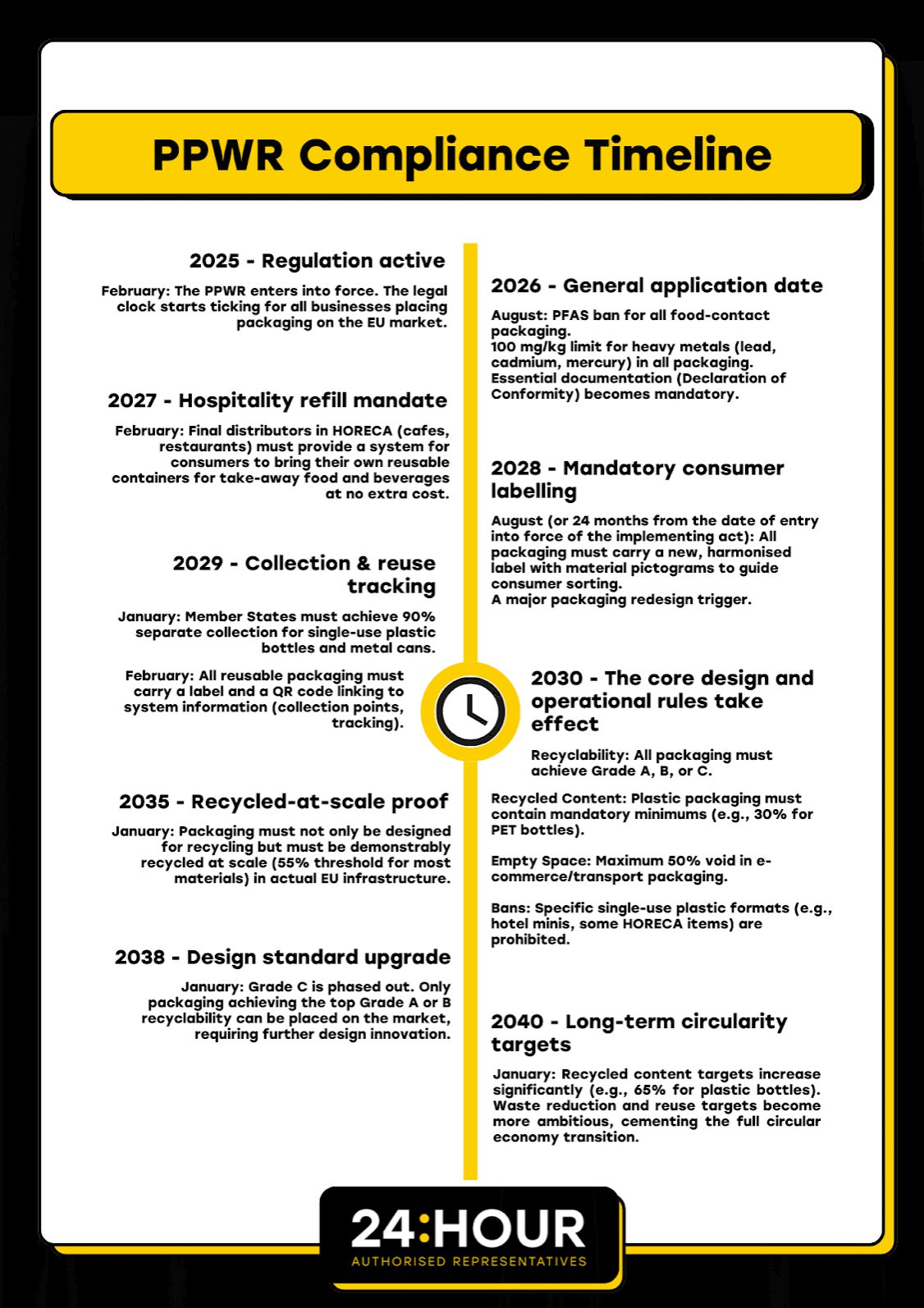
PPWR is not a one-off deadline but a phased transformation of packaging sustainability requirements. The infographic below places 2026 in context and looks ahead to 2040.
Key milestones to plan for:
2026: Introduction of the PFAS ban for food-contact packaging, enforcement of the 100 mg/kg heavy metal limit for all packaging, and mandatory documentation requirements.
2027: The hospitality sector must provide systems that allow consumers to use reusable containers.
2028: Standardised EU labelling requirements become mandatory across all packaging.
2029: A 90% collection target for bottles and cans comes into force, alongside QR-based tracking requirements for reusable packaging.
2030: Core design rules take effect, including recyclability grading (A–C), minimum recycled content targets (including increased use of PCR plastic), limits on empty space, and bans on certain single-use formats.
2035: Packaging must be proven recyclable at scale within real EU infrastructure systems.
2038: Only packaging achieving the highest recyclability grades (A or B) can be placed on the market.
2040: Higher recycled content thresholds apply, alongside more ambitious waste reduction targets.
Why a phased approach matters
PPWR is designed to reshape how packaging is produced, used, and recovered over time. Businesses that act early can:
Spread investment across multiple years
Align product design with future requirements
Streamline multi-country reporting
Strengthen credibility in sustainability-focused markets
Delaying action, on the other hand, increases the risk of disruption as each milestone tightens requirements around materials, labelling, and package waste management.
Final thought
PPWR is already in force, and the 2026 requirements are only the starting point. Companies that take a structured approach now by auditing materials, updating processes, and planning for future milestones will be far better positioned to navigate the evolving regulatory landscape with confidence.
This article was contributed by Ferry Vermeulen, CEO of 24hour-AR, an Authorised Representative supporting companies selling products to the European market.
Related News
-
Supplier News
Spectra Packaging: Navigating PPWR – What you need to know
-
Events
Paris Packaging Week unveils its 2026 conference programme and provides clear insight into the PPWR challenges
-
Events
Packaging Innovations & Empack 2026 puts sustainability and circular solutions in the spotlight
-
Business
Labels – EPR’s secret weapon
-
Supplier News
Spectra produce invaluable guide to UK’s EPR and RAM
Advertisement

Latest Packaging News

OMAG: Packaging for nutraceuticals – greater flexibility, less waste
Designing the right format means improving productivity, sustainability and the final user...
Coca-Cola, Nestlé and Danone agree to revise recycling claims on plastic bottle labels
Coca-Cola, Nestlé and Danone have agreed to amend recycling claims displayed on their plastic...
Students develop recyclable curry and rice packaging for Pho
Two students from Sheffield Hallam University have won Deliveroo's 2026 Sustainable Packaging...
Hormel introduces portioned bacon packaging to reduce food waste
Hormel has introduced a new packaging format for its BLACK LABEL Original Bacon range, designed to...