New smart packaging film uses colour and UV light to indicate meat freshness

Technology
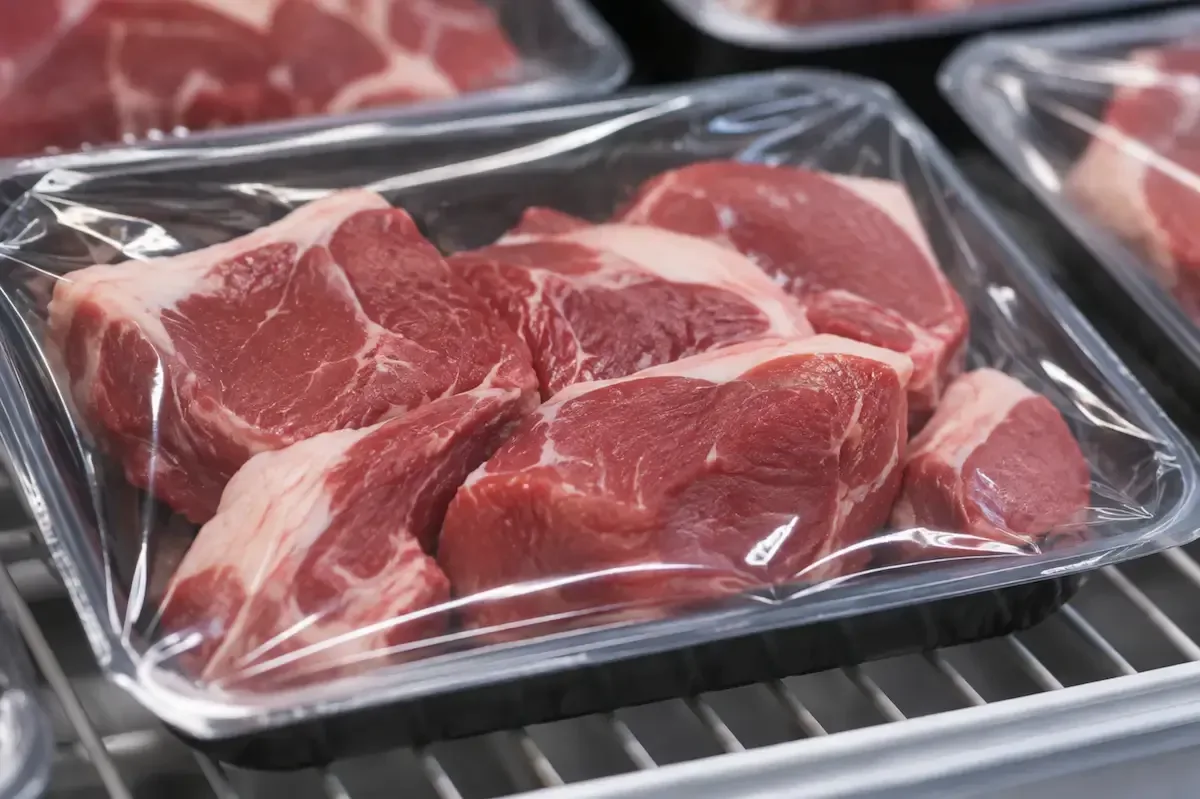
Researchers at Kyushu University in Japan have developed a smart food packaging film that changes colour and produces a fluorescent response under ultraviolet (UV) light as meat deteriorates. The material has been tested on refrigerated mutton and is designed to provide a visual indication of freshness by responding to compounds released during spoilage.
The research, published in the Chemical Engineering Journal on 1 November 2026, involved scientists from Kyushu University, Nanjing Agricultural University in China, Ghent University in Belgium and Nguyen Tat Thanh University in Vietnam.
The film is made using casein, a milk-derived protein, combined with anthocyanins extracted from black soybean seed coats. Anthocyanins are natural pigments that change colour in response to acidity. The researchers modified these pigments with pyridine to introduce fluorescent properties, before combining them with a porous metal–organic framework material known as ZIF-67.
Three formulations containing different concentrations of ZIF-67 were assessed for their ability to monitor freshness and help preserve refrigerated mutton. The formulation identified as Z2 demonstrated the most effective overall combination of sensing performance, preservation properties and material efficiency.
Compared with films made solely from casein, the developed materials also exhibited improved resistance to water, alongside antioxidant and antibacterial properties.
During storage, ammonia and other volatile compounds released as the meat deteriorated caused visible changes in the packaging film. The Z2 formulation produced a noticeable fluorescent response under 365-nanometre UV light from approximately the sixth day of storage, while gradual colour changes could also be observed under normal lighting conditions.
The researchers additionally examined how the films behaved in soil and seawater environments. The materials showed considerable disintegration and mass loss under the conditions tested, although further investigation is required to determine their complete biodegradation and longer-term environmental impact.
We wanted to combine colour changes with fluorescence to make signs of spoilage easier to recognise. Colour provides a simple visual indication, while fluorescence under UV light offers a clearer signal when colour differences are difficult to see.
Xirui Yan, a JSPS researcher at Kyushu University and the paper’s first author.
Further research will also be necessary to evaluate the technology with other food products and under commercial supply-chain conditions, including assessments of material stability, safety, production scalability and costs.
The development could provide an additional method of monitoring food freshness alongside conventional date labelling, with potential applications in food packaging where visible indicators of product deterioration may help reduce unnecessary waste.
Related News
-
Business
New US facility to scale production of moulded fibre meat packaging
-
Supplier News
Bandall: A smarter way to label meat packaging
-
Business
UK start-up scales antimicrobial packaging to tackle food waste
-
Sustainability
New all-in-one fibre-based food tray packaging system to feature at Interpack 2026
-
Supplier News
Mondi highlights corrugated packaging for long journeys and changing climates

Latest Packaging News

New smart packaging film uses colour and UV light to indicate meat freshness
Researchers at Kyushu University in Japan have developed a smart food packaging film that changes...
Rethinking coffee packaging through sustainability and design
Q&A with Emma Loisel, Executive Chair of Volcano Coffee Works Tell us a little about Volcano...
Craemer Hygienic CB3 plastic pallet boxes support efficient seafood handling
A good catch for cold-chain logistics Where fish and seafood are processed, chilled and prepared...
EU Packaging Regulation (PPWR): What pharma manufacturers need to prepare before 2030
With PPWR now in force, pharma packaging teams need years to redesign materials and requalify...