IKEA's iconic FRAKTA bag now contains at least 90% recycled material

Sustainability
IKEA has introduced an updated version of its blue FRAKTA carrier bag, manufactured using a minimum of 90% recycled material, with at least 70% sourced from packaging waste.
The changes coincide with the bag's 30th anniversary and follow several years of development aimed at increasing recycled content while maintaining its original design, strength and affordability.
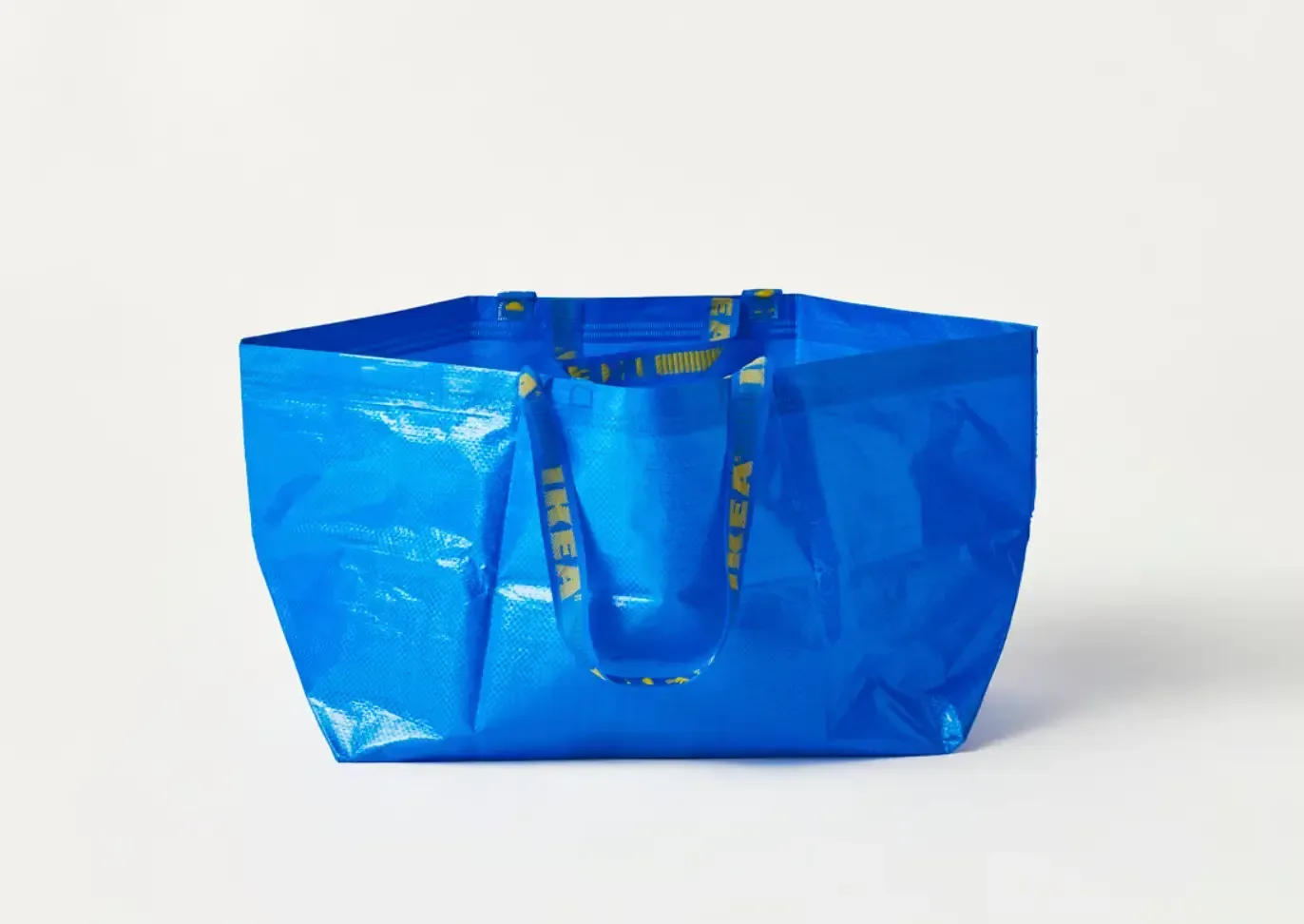
Available in 36-litre and 71-litre sizes, the updated FRAKTA bag incorporates recycled polypropylene (PP) recovered from packaging used in the food and plastics industries. Sources include plastic food containers and large industrial bags previously used to transport products such as milk powder.
A small quantity of blue pigment is added to retain the bag's established colour, while a limited proportion of virgin polypropylene is used to maintain its carrying capacity of up to 25 kg.
Both the main body and handles are manufactured from polypropylene, creating a single-material construction.
The revised design is also produced using a fully automated manufacturing process. Unlike previous versions, which required the handles to be stitched into place manually, the new production method fuses them directly into the bag material.
According to IKEA, eliminating the stitching process saves approximately 89,000 kilometres of thread, while automated production helps reduce material losses and maintain consistent product quality.
Any leftover polypropylene generated during manufacturing is collected and returned to the production process for use in new bags.
Achieving a high share of recycled material content in the FRAKTA bag meant overcoming significant technical challenges. Recycled polypropylene requires additional processing and quality control, while redesigning the FRAKTA bag to use a single material involved rethinking key elements of the bag without compromising strength or affordability. Through years of testing and close collaboration with suppliers, the team was able to transform how the FRAKTA bag is made while keeping it recognisably FRAKTA.
Jakub Brat, Engineering Manager at IKEA of Sweden.
The company states that these manufacturing efficiencies have helped offset the additional costs associated with sorting, processing and quality control when using recycled polypropylene, allowing the bag to retain its existing low price.
First introduced in 1996 to help customers transport purchases home, the FRAKTA bag has since become one of IKEA's most recognisable products. More than 44 million bags are sold annually, making it the company's best-selling home furnishing product by unit volume.
Beyond its original purpose, the reusable carrier is commonly used for household storage, laundry, recycling and transporting belongings.
The updated FRAKTA bag is now available in IKEA stores worldwide.
Related News
-
Business
NIVEA Creme tin now contains 95% recycled aluminium
-
Events
Conference programme to tackle sustainability, regulation and innovation at UKPackaging Expo
-
Business
Co-op expands recycling scheme after collecting more than 500,000 coffee pods
-
Supplier News
Spectra unveil new PET jar as part of bold 55% recycled content initiative
-
Technology
Recycling process targets hard-to-recycle multi-layer plastic packaging

Latest Packaging News

Compostable packaging from Swedish cycling event used in tree planting project
Compost produced from food waste and compostable packaging collected during Sweden's Vätternrundan...
Rémy Martin introduces festive packaging for 2026 limited-edition cognac collection
Rémy Martin has introduced a limited-edition holiday collection for 2026, featuring specially...
NEW Horizontal Flowrappers available in the UK from Soken Engineering
Following a recent partnership with Sigitaspak, Soken Engineering are proud to offer a range of...
Palcut: PPWR and pallet packaging – how to reduce packaging without compromising pallet stability
PPWR is changing the way manufacturers need to think about packaging. The new EU Packaging and...