Set sail to the Sea: How SUPER DRY protects apparel during global travel

Supplier News
Shipping clothes, especially those made of cotton, polyester and leather, demands more than careful packaging. Both brands and customers expect products to arrive in perfect condition: clean, intact and in the same condition as they left.
But maritime shipping exposes garments to fluctuating temperatures and humidity. As containers pass through varying climate zones, condensation forms inside. It damages fabrics, leaving polyester stiff, leather warped and cotton with a musty odour.
For fast fashion brands that rely on reliable, high-volume supply chains, even minor moisture damage can lead to rejected stock, unnecessary costs, and diminished customer trust.
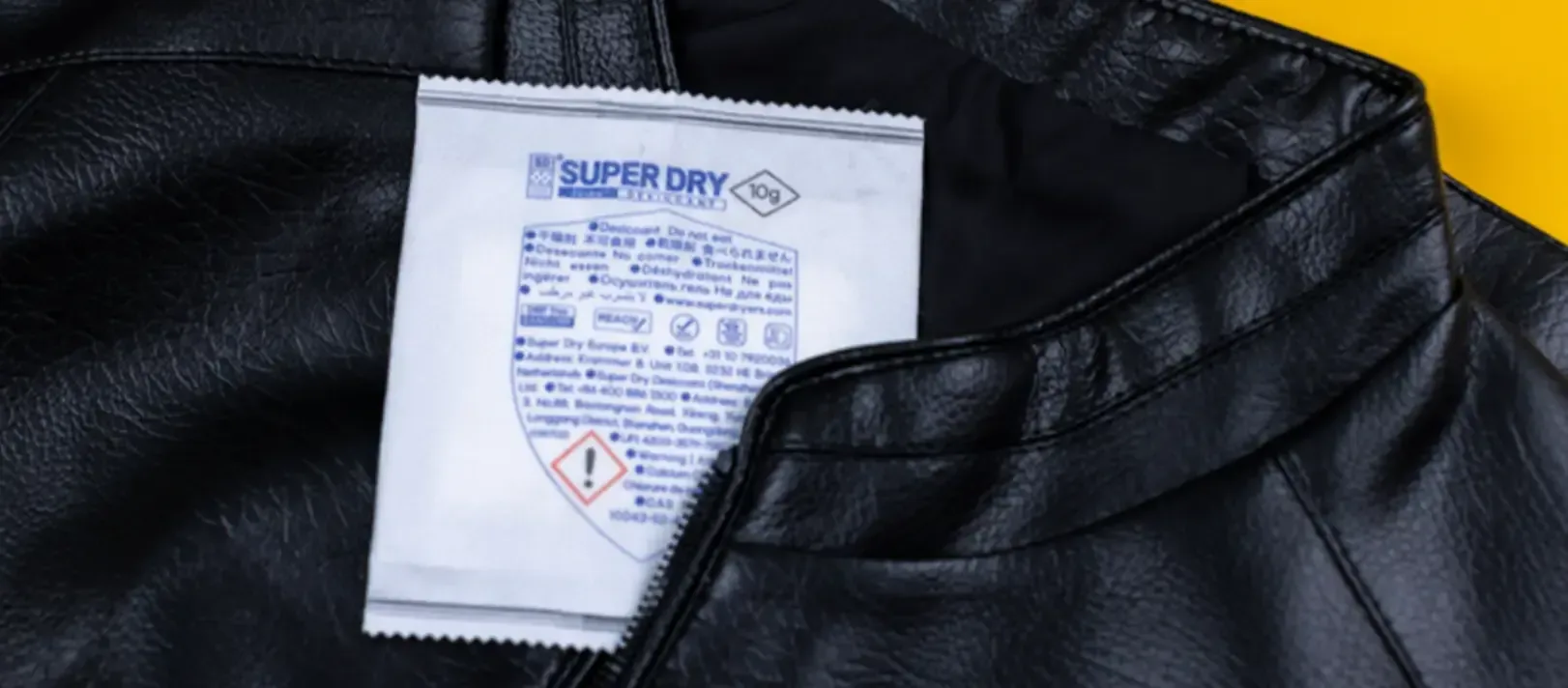
When traditional options fall short
Traditional desiccants such as silica gel and clay offer limited absorption. They typically absorb 20~40% of their weight and degrade rapidly in more humid or warmer conditions. By contrast, calcium chloride offers a more reliable choice. It can absorb up to 300% of its weight in moisture, maintaining consistent performance across a temperature range of -5°C to 90°C for around 90 days. This extended reliability is critical for long sea voyages spanning multiple climate zones, with complexity that silica gel and clay cannot handle.
Leading brand with effective solution
A leading Swedish fast fashion brand operates an extensive global supply network, with production concentrated in humid regions and distribution reliant on sea freight. The brand demands effective operations grounded in suppliers’ commitment to both quality and sustainability, leaving little tolerance for preventable damage during transit.
The moisture challenge it faced was significant. Garments were exposed to moisture risks at multiple points: during manufacturing in humid climates and during transit under varying weather conditions. Condensation inside shipping containers threatened fabrics across its entire product range. Any damage not only disrupted supply chain efficiency but also risked undermining the brand’s reputation for product quality.
To address this, the brand adopted proactive humidity control as a core measure, integrating SUPER DRY calcium chloride desiccants into its container shipments. Garments consistently arrived in satisfying condition, with no delays for inspection, rework or returns. SUPER DRY’s solution has become a cornerstone of the brand’s supply chain integrity strategy, preserving product quality and brand reputation across every shipment.
Small packs, big solutions
Moisture damage during sea freight is a preventable problem with packs of calcium chloride. Where conventional desiccants fall short amid the rising demands of extended voyages, SUPER DRY delivers a measurable, lasting moisture protection solution. For apparel brands where product integrity and supply chain reliability are non-negotiable, SUPER DRY is the clear choice.
To discover more about protecting your cargo with SUPER DRY, contact the team.
This article was originally published by SUPER DRY.

Related News
-
Supplier News
Clean and dry, every time: How SUPER DRY helps protect premium egg quality
-
Supplier News
SUPER DRY: How El Niño could affect global shipping and moisture risk
-
Supplier News
Smart moisture protection for PPWR: SUPER DRY supports compliance with new EU regulations
-
Supplier News
SUPER DRY: Dry with standards – why ISO-certified desiccant is smarter for supply chain
-
Supplier News
SUPER DRY: Pack smart, stay compliant – What PPWR Means for businesses targeting the EU?
Latest Packaging News

Registration now open for Packaging Innovations & Empack 2027
The UK packaging and processing community will return to the NEC Birmingham on 24 & 25...
Clean and dry, every time: How SUPER DRY helps protect premium egg quality
For high-quality egg suppliers, appearance matters. Even minor shell or quality defects can affect...
Rowlinson Packaging: The hidden cost of product damage and why industrial packaging matters
For many businesses, packaging is often viewed as a procurement decision focused primarily on cost....
Autopack: What is a sealing machine and how does it work?
A sealing machine closes packaging after a product has been filled or packed. Depending on the...