Rethinking coffee packaging through sustainability and design

Business
Q&A with Emma Loisel, Executive Chair of Volcano Coffee Works
Tell us a little about Volcano Coffee Works and what you think sets the business apart in the speciality coffee market?
Volcano Coffee Works makes speciality coffee easy to get right – helping more venues serve seriously good coffee, straight up.
We are a full-service speciality coffee partner, combining great-tasting, responsibly sourced coffee with the machinery, training, technical support and practical guidance businesses need to deliver it consistently well. The difference is that we bring the quality, ethics and credibility of speciality coffee without the unnecessary complexity that can sometimes surround it.
We support everyone from cafés and restaurants to workspaces, cinemas, gyms and hotel groups, helping them make better coffee practical and commercially valuable. We also have the infrastructure and service capability to support multi-site and high-volume partners at scale, while maintaining the quality and consistency that customers expect.
What do you think is the most important thing for businesses to consider when choosing a speciality coffee partner?
Businesses should look for more than a coffee supplier; they need a partner that can make great coffee work in the real world.
The coffee itself has to taste brilliant, of course, but the right partner should also understand the day-to-day realities of running a venue. That means offering the right equipment, training teams properly, providing reliable technical support and giving straightforward advice that helps maintain quality at every touchpoint.
It is also important to find a partner that can grow with the business. Whether a venue has one site or a national estate, it needs confidence that its coffee programme can remain consistent, reliable and commercially effective as demand changes. Great coffee should never feel complicated to deliver!
In terms of packaging, what is one change you have made that has made a demonstrable difference?
In 2019, we moved our wholesale coffee from 1kg to 2kg bags. It was a relatively simple change, but at the volumes we were producing at the time it removed approximately 1,500kg of plastic from our packaging each year. As our wholesale business has grown, we estimate that the same change now saves around 2,550kg of plastic annually – enough plastic bottles, if stacked end to end, to reach approximately 27km high, or more than three times the height of Everest.
It reflects how we tend to approach packaging sustainability more broadly. Rather than looking at any material or format in isolation, we consider the amount of material being used, its lifecycle and likelihood of actually being recycled, while making sure the packaging can still properly protect the coffee. Sometimes relatively straightforward changes to format can have a significant impact at scale.
Have you ever explored alternative packaging solutions?
We’ve explored a number of alternative materials over the years, including paper and compostable formats. Our view is that there isn’t a single universally sustainable packaging material: you have to balance the total amount and lifecycle of the material, the likelihood that it will actually be recovered through existing waste infrastructure, and its ability to protect the product.
We were the first speciality-grade coffee business in the UK to produce compostable coffee pods. Launched in 2017, the range received a Product Innovation Award at the London Coffee Festival and went on to secure nationwide grocery listings, demonstrating the appetite among consumers for more sustainable alternatives.
Why is that especially important in the coffee market?
Roasted coffee needs an effective barrier against oxygen and moisture to preserve freshness, while the valve allows gases released by freshly roasted coffee to escape without allowing oxygen back into the bag. A packaging material that compromises either can shorten the useful life of the coffee and potentially create waste elsewhere.
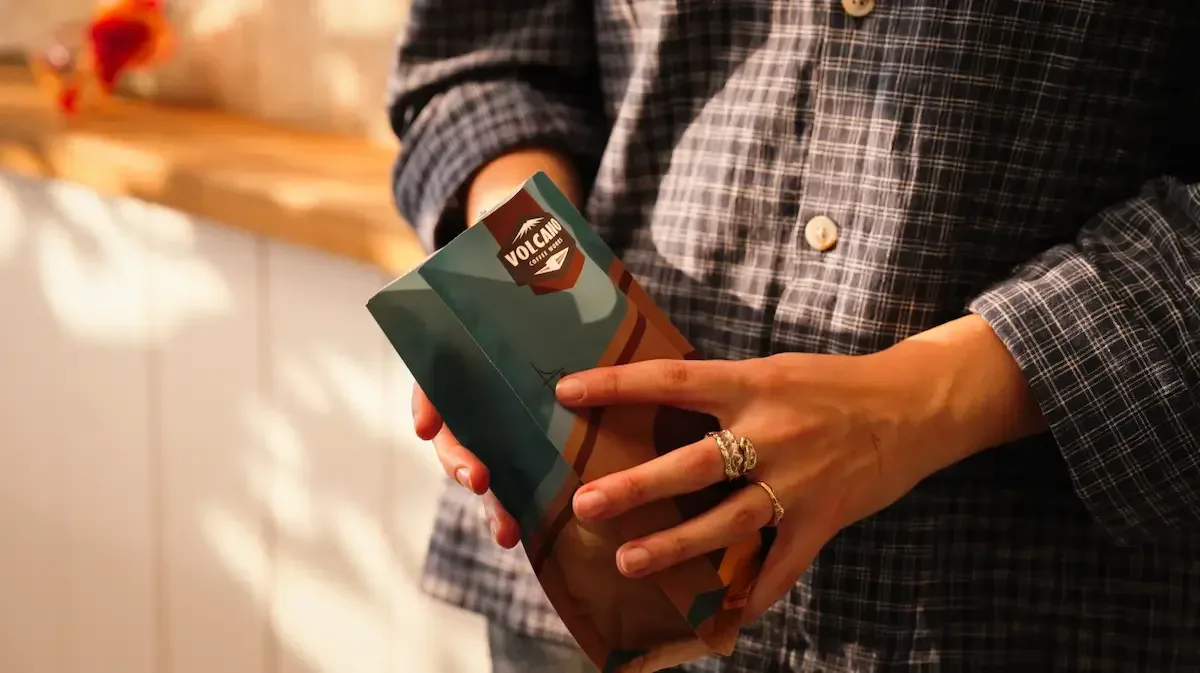
That’s why, within the UK’s current waste infrastructure, we believe recyclable packaging currently offers the best balance between real-world disposal and preserving product quality. Volcano moved to fully recyclable coffee bags in 2019, and we’re now moving to bags containing 30% recycled material as the next step in reducing the amount of virgin material we use.
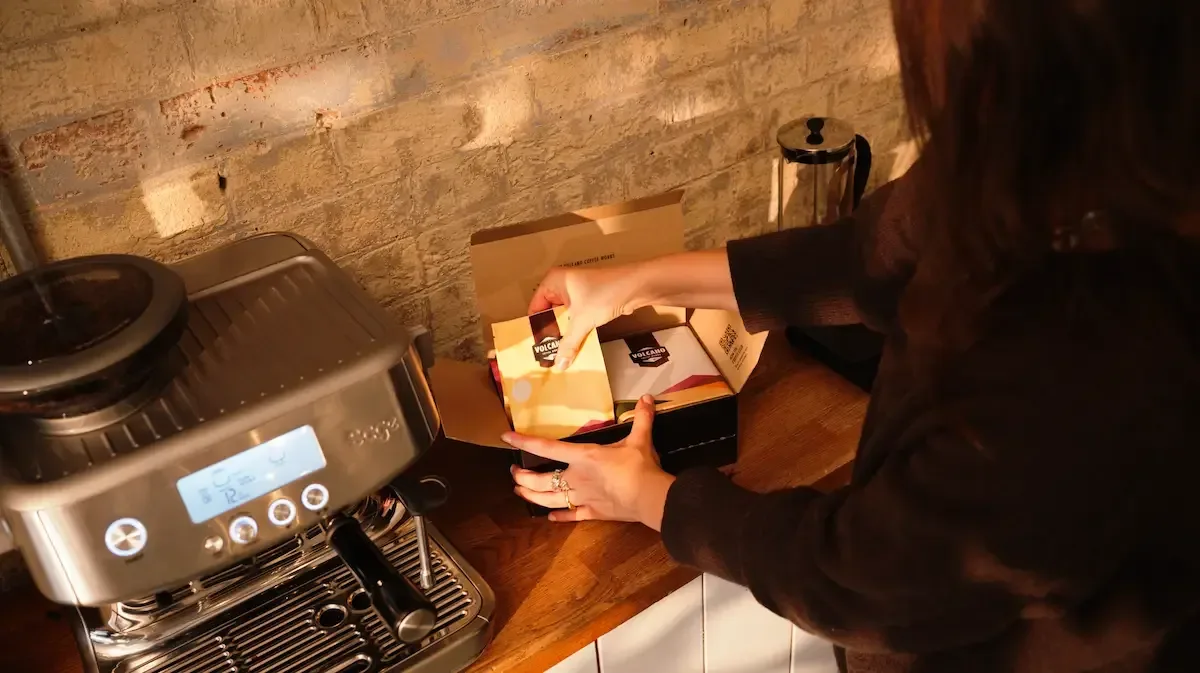
We’ve taken a similar approach to our secondary packaging with the various boxes that coffee ships in. Since 2019, our boxes have been FSC-certified and made from 70% recycled material.
How does your packaging approach play into your wider CSR commitments?
Packaging is one important part of a much wider commitment to reducing our impact and doing business responsibly. We are always looking at practical ways to make better choices, including using recyclable packaging, while recognising that there is no single fix and that meaningful progress comes from looking at the whole operation. As packaging touches every part of our supply chain, it is also an area where we can track and measure progress relatively simply. Our paper packaging contains an average of 77% recycled material, rising to as much as 90% across some boxes.
That means considering everything from responsible sourcing and our support for initiatives such as the Sombra/MIO agroforestry project, to renewable energy, carbon-offsetting and our wider journey towards carbon insetting. This includes practical changes such as moving from hessian coffee sacks to Klabin recyclable bags, while where smaller producers cannot yet facilitate this switch we find local manufacturers that can repurpose hessian into furniture and accessories.
As a B Corp, we want to keep taking practical action and make those choices accessible for the businesses we work with, without compromising on coffee quality.
We’ve spotted you use really beautifully designed colourful packaging. Can you tell us more about that?
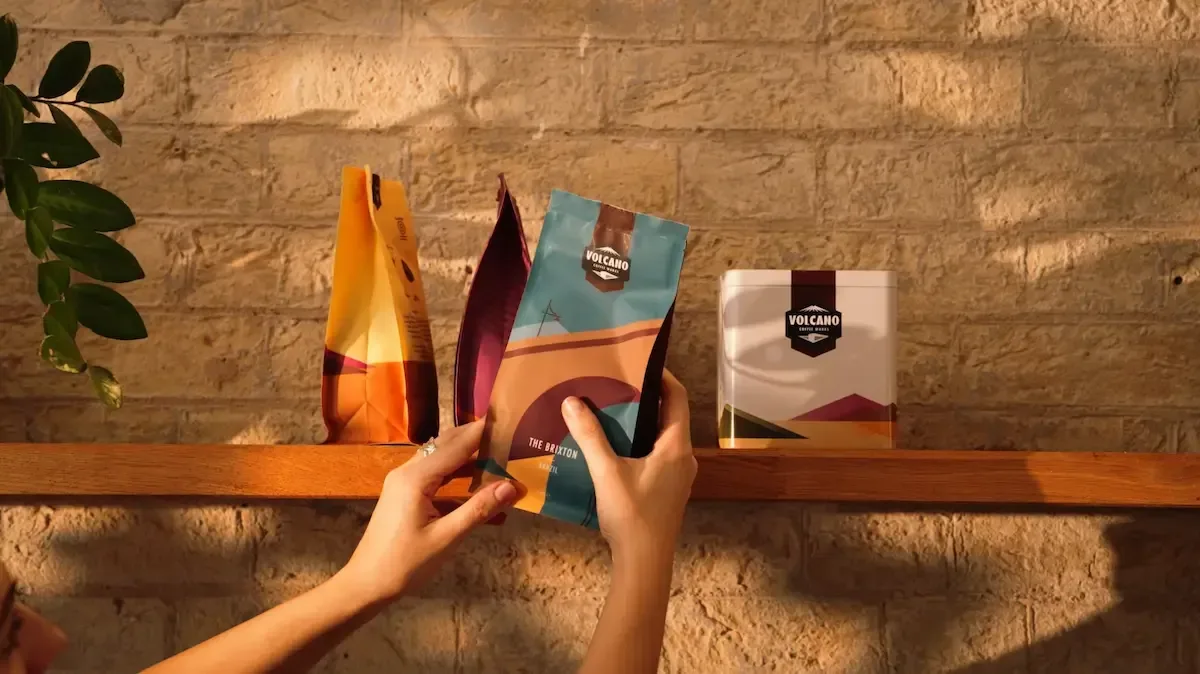
The coloured bags are primarily a navigation tool rather than decoration. One of the challenges with speciality coffee is that packaging asks customers to process quite a lot of information – origin, process, variety, roast and tasting notes – before they have any real sense of whether they’ll actually enjoy the coffee.
We wanted to make that decision much more intuitive and colour was the universal language we found most effective. The different colours create a simple visual shorthand for flavour, helping customers quickly distinguish between coffees and understand where they sit within the range. They actually reference the SCA Flavour Wheel, which is the standardised reference the industry uses for known flavour notes in coffee. Research, including work by sensory scientist Dr Fabiana Carvalho, shows that colour helps shape flavour expectations. It does not dictate what someone will taste, but it gives them a useful cue as to the flavour profile they may discover.
Ultimately, we want to bring the quality and expertise of speciality coffee without making people feel they need to become coffee experts themselves. The packaging obviously still gives you the detail if you want it, but the visual system helps you make a good decision before you’ve had to read all of it.
Related News
-
Business
New research highlights growing consumer preference for recyclable coffee capsules
-
Business
Collectible coffee cans feature characters from Marvel's Avengers: Doomsday
-
Events
Packaging Innovations & Empack names judges for Future Trailblazer Awards 2027
-
Business
Co-op expands recycling scheme after collecting more than 500,000 coffee pods
-
Sustainability
Nespresso expands curbside aluminium capsule recycling in New York

Latest Packaging News

Rethinking coffee packaging through sustainability and design
Q&A with Emma Loisel, Executive Chair of Volcano Coffee Works Tell us a little about Volcano...
Craemer Hygienic CB3 plastic pallet boxes support efficient seafood handling
A good catch for cold-chain logistics Where fish and seafood are processed, chilled and prepared...
EU Packaging Regulation (PPWR): What pharma manufacturers need to prepare before 2030
With PPWR now in force, pharma packaging teams need years to redesign materials and requalify...
Empack's new look and direction – what it means for the print and packaging industry
As a new year rapidly approaches, a fresh look and feel for a gem in the print and packaging supply...